
History
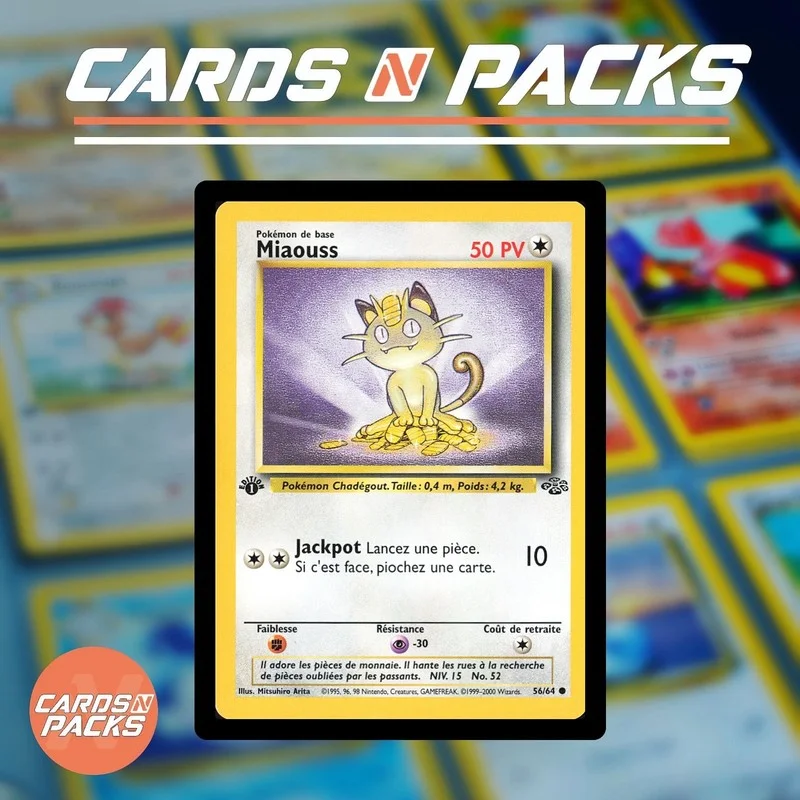
Meowth, a Normal-type Pokémon, is one of the most recognizable pocket monsters, notably due to its iconic role alongside Team Rocket in the animated series. Its ability to find coins and its charisma have made it a memorable figure in the Pokémon universe. This specific card, number 56/64, comes from the Jungle expansion, the second major series of the Pokémon Trading Card Game.
The Jungle expansion, launched after the Base Set, introduced 48 new Pokémon to the TCG, bringing the total to 64. It is identifiable by its palm tree leaf symbol and was the first to offer holographic Pokémon that were neither starters nor legendary (although this Meowth is a common non-holographic version). The artwork for this Meowth, signed by the legendary Mitsuhiro Arita, captures the Pokémon in a natural, verdant setting, true to the wild and exploratory spirit of the expansion.
Mitsuhiro Arita is a fundamental artist in the history of Pokémon cards, having helped define the visual aesthetic of the TCG from its beginnings. His distinctive style is recognizable on countless classic cards. This Jungle Meowth, though common, represents a piece of TCG history, bearing witness to the rapid expansion of the Pokémon universe and the art that accompanied it.
Fun facts
- The Meowth 56/64 card from the Jungle expansion is one of many illustrations of this iconic Pokémon created by Mitsuhiro Arita, one of the most prolific and beloved artists from the early generations of Pokémon cards.
- Although Meowth is often associated with Team Rocket, this specific card from the Jungle expansion depicts it in a more natural setting, far from its animated adventures, reflecting the wild spirit of the expansion.
- The Jungle expansion (Base Set 2) was the first to introduce holographic non-legendary and non-starter Pokémon, although this particular Meowth is a common non-holographic version.
Collector's tip
For collectors, this Meowth 56/64 card from the Jungle expansion in 1st Edition represents a worthwhile investment. The "1st Edition" stamp is crucial and significantly increases its value compared to unlimited print runs. Focus on the card's condition: sharp corners, absence of creases, and a pristine surface are essential criteria. Although it is a common card, its 1st Edition rarity makes it desirable. For copies in excellent condition, professional grading can greatly enhance the value of your piece.


