History
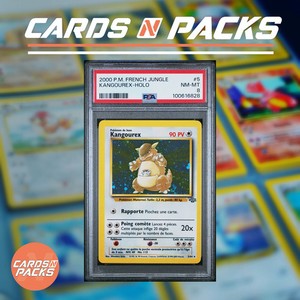
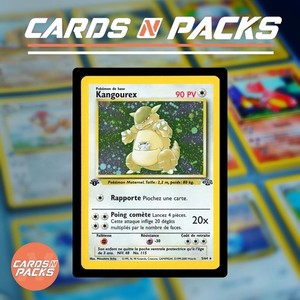
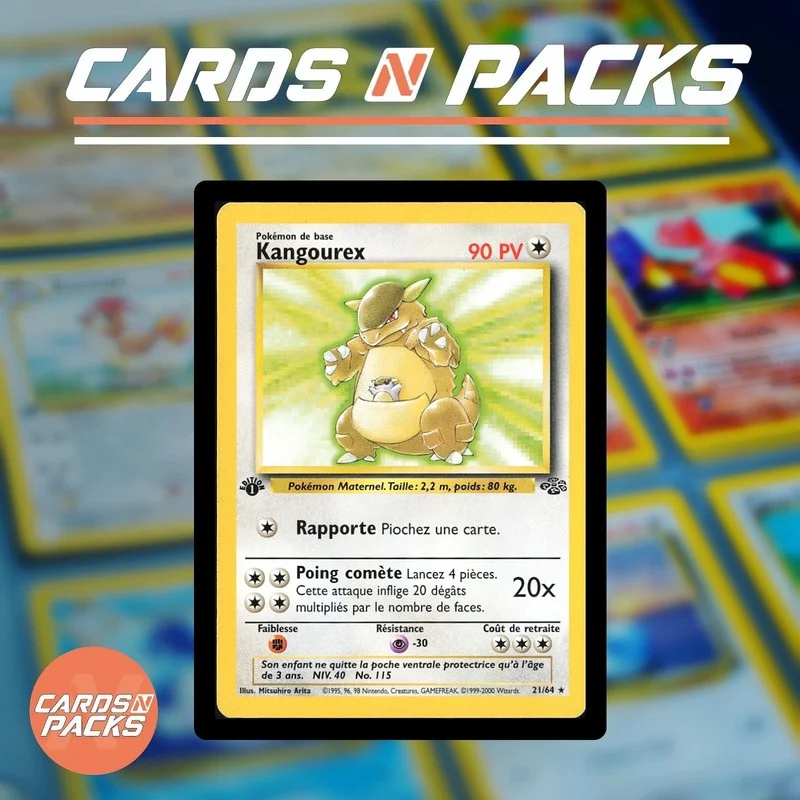
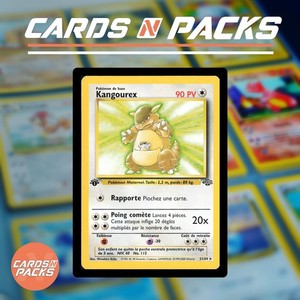
The Kangaskhan #21/64 card from the Jungle expansion, in 1st Edition, is an iconic piece for any Pokémon TCG collector. Kangaskhan, the Parent Pokémon, is known for its fierce protective instinct towards its baby, which it carefully keeps in its abdominal pouch. This Normal-type Pokémon embodies quiet strength and devotion, traits that have touched many fans since its introduction in the first generation of video games.
The Jungle expansion, released after the Base Set, was the second to enrich the Pokémon TCG universe, introducing 48 new Pokémon and a distinctive symbol: a jungle leaf. This Kangaskhan card, although non-holographic, is a rare from the expansion, highlighting its importance and rarity at the time. Masako Yamashita's illustration perfectly captures the essence of Kangaskhan, showing it in its natural environment with a posture that is both alert and benevolent.
Masako Yamashita's artwork for Kangaskhan is a perfect example of the aesthetic of early Pokémon cards, favoring a faithful and detailed representation of the Pokémon. The wooded background and natural colors help immerse the viewer in Kangaskhan's wild habitat, reinforcing the expansion's jungle theme. This card is a testament to the golden age of the Pokémon TCG and the artistic quality that characterized its beginnings.
Fun facts
- Kangaskhan is one of the few Generation 1 Pokémon without a pre-evolution or evolution, though it did receive a Mega Evolution in the video games.
- The Kangaskhan 21/64 card is one of the non-holographic rares from the Jungle expansion, meaning it was one of the harder cards to pull from packs without being a shiny card.
- Masako Yamashita, the artist of this card, is also known for illustrating other iconic cards from early expansions, contributing to the recognizable aesthetic of the Pokémon TCG from that era.
Collector's tip
For collectors, acquiring a Kangaskhan 21/64 Jungle 1st Edition card is an excellent opportunity. It is crucial to check the overall condition of the card, especially the corners, edges, and surface, as non-holographic cards from this era are often more prone to play wear. Ensure the '1st Edition' symbol is present below the artwork to confirm its authenticity and increased value compared to an unlimited edition. A well-preserved and certified card can represent a stable investment for your collection.