History
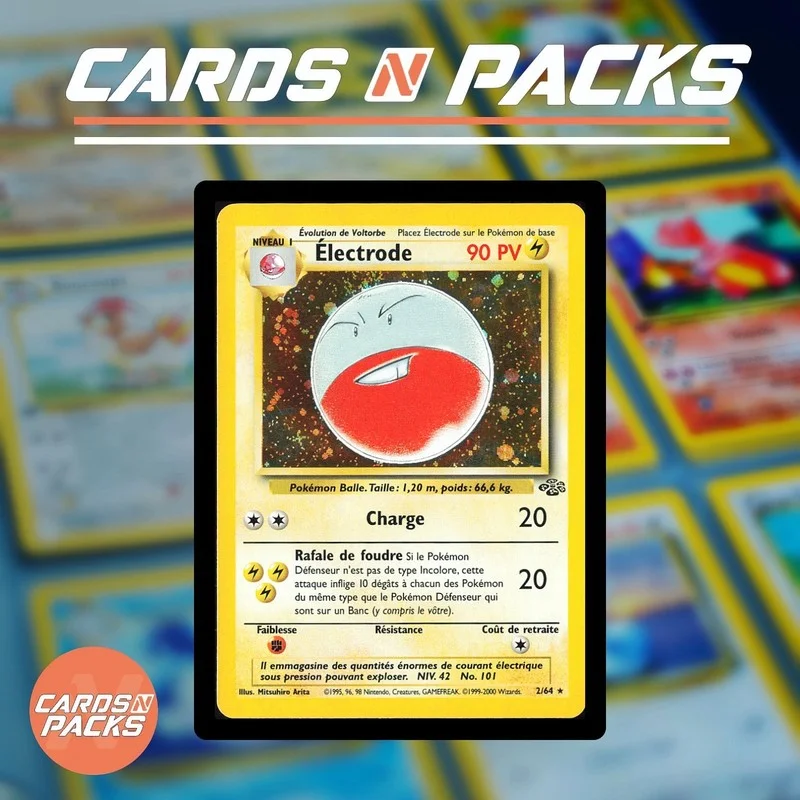
Electrode, the Ball Pokémon, is the evolution of Voltorb and is renowned for its incredible speed and its tendency for self-explosion. It made its debut in the Pokémon Trading Card Game with the Jungle expansion, the second main set in the base block, which introduced many beloved first-generation Pokémon after the Base Set. This specific card, numbered 2/64, is an iconic example from that era.
The unique artwork for this Electrode is the creation of Yuka Morii, an artist celebrated for her distinctive style. She employs clay sculpting or similar modeling techniques to create physical models that are then photographed. This approach gives the card a peculiar texture and depth, making Electrode particularly expressive and memorable with its characteristic smirk and smooth, spherical appearance.
The Jungle expansion is a cornerstone of classic collecting, famous for its rare holographic cards and its role in expanding the Pokémon TCG universe. The holographic Electrode from this Edition 2 is a sought-after piece for collectors looking to complete their set or acquire an icon from the game's early days, representing the golden age of the Pokémon TCG.
Fun facts
- Electrode is one of the fastest Pokémon in the first generation, making it a formidable opponent in battles.
- Artist Yuka Morii is famous for her unique style of creating clay or modeling paste figures for her cards, giving a distinctive and tangible look to the Pokémon she illustrates.
- The Jungle expansion is also known for the famous 'no symbol error' on some of its early English prints, where the small leaf (Jungle) symbol was missing, although this 'Edition 2' card is not affected by it.
Collector's tip
For collectors, the holographic Electrode from the Jungle expansion is a prime piece. Carefully check the overall condition of the card, especially the holographic surface, which can be prone to micro-scratches and "swirling" patterns that can add to its appeal. The 'Edition 2' designation means it's a later print run than the initial French release (often referred to as 'Edition 1'), which can influence its rarity and value compared to a highly sought-after 'Edition 1'. However, an 'Edition 2' card in excellent condition remains highly valued and represents an excellent addition to any vintage collection, offering great value for a Pokémon TCG classic.