
History
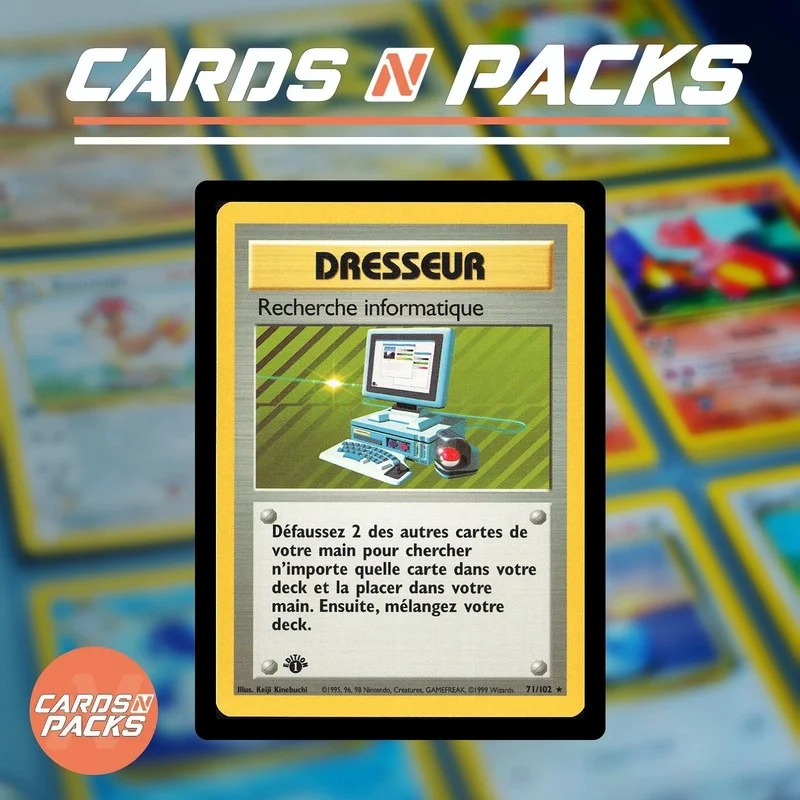
The Computer Search card, number 71/102 from the iconic Base Set, represents a strategic cornerstone of the early Pokémon Trading Card Game. As part of the very first expansion released in the West, it was a non-holographic Trainer card of Rare rarity, crucial for competitive deck building. Its 1st Edition, recognizable by its small "1st Edition" symbol beneath the artwork, is particularly sought after by collectors.
Keiji Kinebuchi's artwork depicts a futuristic computer scanning data, perfectly reflecting the card's effect: discard two cards from your hand to search your deck for any card and add it to your hand. This search and draw mechanism was extremely powerful, allowing players to quickly access their key cards and implement their strategies. Its central role in the metagame of the time underscores its historical importance.
As a Trainer card, Computer Search stands apart from Pokémon cards by its ability to alter the course of the game without introducing a creature to the field. It embodies the ingenuity of the Base Set's game mechanics, where even non-Pokémon cards could have a decisive impact. Its presence in countless competitive decks of the Base Set era testifies to its tactical value and its lasting relevance for collectors and nostalgic players.
Fun facts
- Computer Search is one of the few Trainer cards from the Base Set to have been re-released with different artwork in the Black & White—Boundaries Crossed expansion under the same name, proving its lasting utility.
- The card's effect, allowing players to search for any card in their deck, made it a staple in many competitive decks of the "Wizard of the Coast" era for its ability to make strategies more consistent.
- Artist Keiji Kinebuchi is also known for illustrating other iconic Base Set cards, such as Potion and Pokémon Breeder, contributing to the recognizable aesthetic of the early cards.
Collector's tip
For collectors of the Computer Search 71/102 from the Base Set 1st Edition, the card's condition is paramount. Carefully check the edges, surface, and corners for any signs of wear or whitening, as even small imperfections can significantly impact its value. 1st Edition cards are much more sought after than their unlimited counterparts, and a copy certified by a grading service (PSA, Beckett, CGC) with a high grade will see its appeal and value increase considerably in the vintage Pokémon card market. Keep an eye on market trends for this classic card.


