History
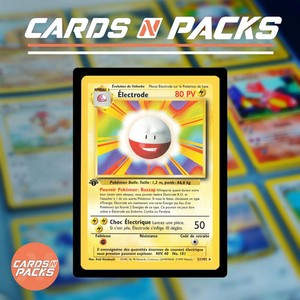
Electrode, the Ball Pokémon, is the evolved form of Voltorb and is known for its explosive capabilities. The Electrode 21/102 card from the Base Set is an iconic component of the very first Pokémon Trading Card Game expansion. As a non-holographic "Rare" card, it is among the cards that defined the early days of the TCG and introduced fundamental gameplay mechanics.
This specific version, originating from the 1st Edition of the Base Set, is particularly sought after by collectors. The 1st Edition is distinguished by its small "1st Edition" logo on the card, signifying it belongs to the very first print run of the expansion. Keiji Kinebuchi's artwork captures Electrode in a dynamic pose, highlighting its inherent electric energy, a characteristic style of illustrations from that era that blends simplicity with impact.
Fun facts
- The Electrode 21/102 card is one of the 16 non-holographic "Rare" cards in the Base Set.
- Electrode is the only Electric-type Pokémon in the Base Set to feature a self-destructing attack, "Selfdestruct", mirroring its signature ability in the video games.
- Keiji Kinebuchi's artwork for Electrode is one of his many contributions to the Base Set, also including Pokémon like Charizard and Mewtwo.