History
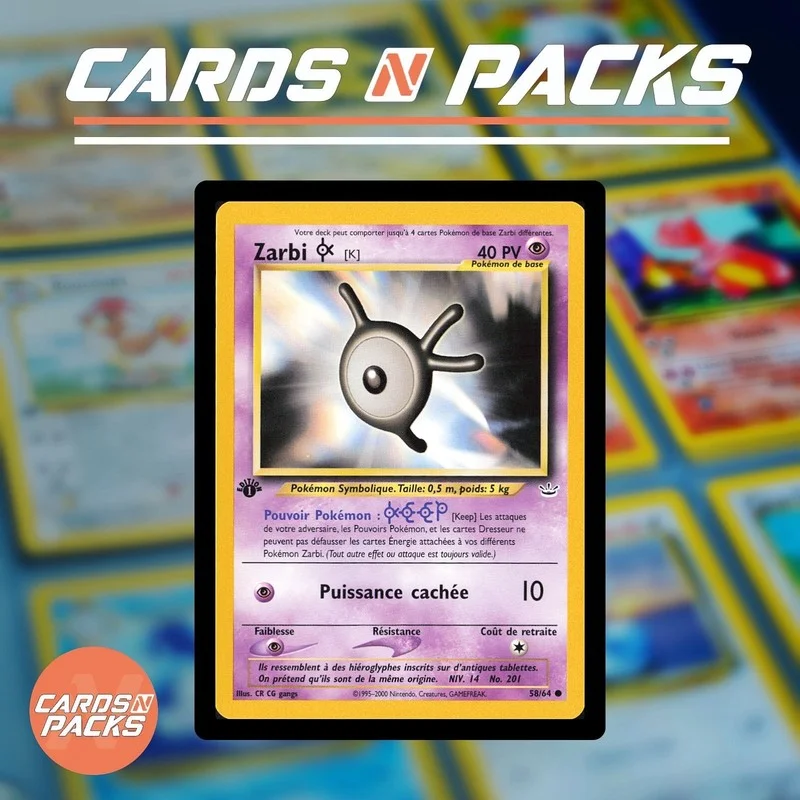
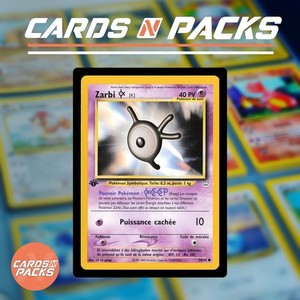
The Unown K 58/64 card from the Neo Revelation expansion is a fascinating testament to the second generation of Pokémon. First introduced in the Pokémon Gold and Silver games, Unown are unique Pokémon, each representing a letter of the Latin alphabet or a punctuation mark. Unown K embodies the letter 'K', adding a piece to the vast linguistic puzzle that this mysterious species represents. Their peculiarity lies in their ability to form words when gathered, a characteristic that has captured the imagination of trainers and collectors alike.
The Neo Revelation expansion, released in 2001, is renowned for its mystical atmosphere and the introduction of legendary and mysterious Pokémon from the Johto region. It deepened the lore of Unown in the Pokémon TCG, often granting them 'Unown Powers' that offered unique strategic advantages. The artwork for Unown K, created by CR CG gangs, captures the enigmatic essence of this floating Pokémon with a simple yet effective design that highlights its distinctive form.
As a common 1st Edition card, Unown K 58/64 is an essential item for any collector looking to complete the Neo Revelation set or gather all the forms of Unown. Its inclusion in the set underscores the importance of Unown in the Pokémon universe of that era, not only as collectible creatures but also as symbols of an ancient mystery.
Fun facts
- Unown are the only Pokémon whose physical appearance changes to represent every letter of the alphabet, plus exclamation and question marks, for a total of 28 forms.
- The Neo Revelation expansion is the third of four 'Neo' sets and was the first to introduce Generation II Pokémon alongside legendary Pokémon and 'Shining' forms.
- The artist collective 'CR CG gangs' is a common signature on early Pokémon cards, often used for common cards or shared artwork.
Collector's tip
For collectors, the Unown K 58/64 1st Edition card is a prime piece to complete a Neo Revelation set. The significance of the 1st Edition is crucial for value and authenticity: ensure the small '1st Edition' logo is present below the artwork. Although a common card, its condition is paramount; cards in perfect condition (Near Mint or Gem Mint) are always the most sought after. Check the edges, surface, and corners for any wear. Price trends are generally stable for commons from this era, but a well-preserved 1st Edition card can still surprise with its value, especially if intended for certification.