History
Wooper, the charming, distinctively-gilled Water Fish Pokémon, is an iconic creature from the second generation of Pokémon, hailing from the Johto region. Its simple yet recognizable design makes it a favorite among many fans. As a Water and Ground type, Wooper is often encountered in aquatic environments such as lakes and rivers, where it feeds and thrives.
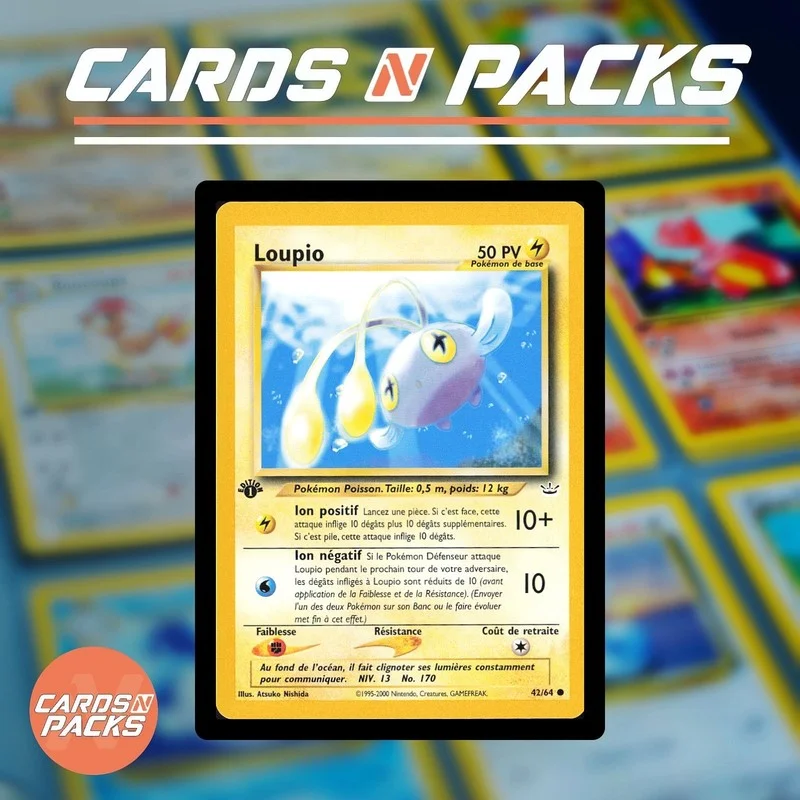
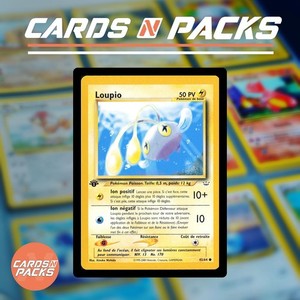
The Wooper 42/64 card is part of the Neo Revelation expansion, one of the flagship sets of the Neo era, which marked a period of innovation for the Pokémon Trading Card Game. Released in 2002 in the West, Neo Revelation introduced new gameplay mechanics and continued to explore the diversity of Johto Pokémon. This expansion is also famous for featuring the Legendary beasts Raikou, Entei, and Suicune, while also offering more modest but equally essential Pokémon like Wooper.
The artwork for this card is by Atsuko Nishida, a legendary artist renowned for her work on designing many original Pokémon, including Pikachu. On the Wooper 42/64 card, Nishida captures Wooper's peaceful essence in its natural habitat. The artwork depicts Wooper with its characteristic smile, submerged in a simple aquatic environment, faithfully reflecting its behavior and appearance as portrayed in the video games and anime.
Fun facts
- Wooper is a Water/Ground-type Pokémon, which grants it complete immunity to Electric-type attacks, but in return, a double weakness to Grass-type attacks.
- Artist Atsuko Nishida is an iconic figure in the Pokémon world, being not only the illustrator of this card but also the original designer of Pikachu.
- The Wooper 42/64 card from Neo Revelation is a Common 1st Edition card, reflecting its frequent appearance in booster packs of the time and its representation of Johto's fauna.
Collector's tip
For collectors, the condition of a Wooper 42/64 Neo Revelation 1st Edition card is paramount. Although it is a common card, a version in perfect condition (Near Mint or Mint) from the 1st Edition retains collectible value, especially for completionists or enthusiasts of the Neo series. Carefully check for any creases, scratches, whitening on the edges, or surface damage. 1st Edition cards are distinguished by a small '1st Edition' logo under the illustration, a crucial detail for their authenticity and collecting potential compared to unlimited editions.