
History
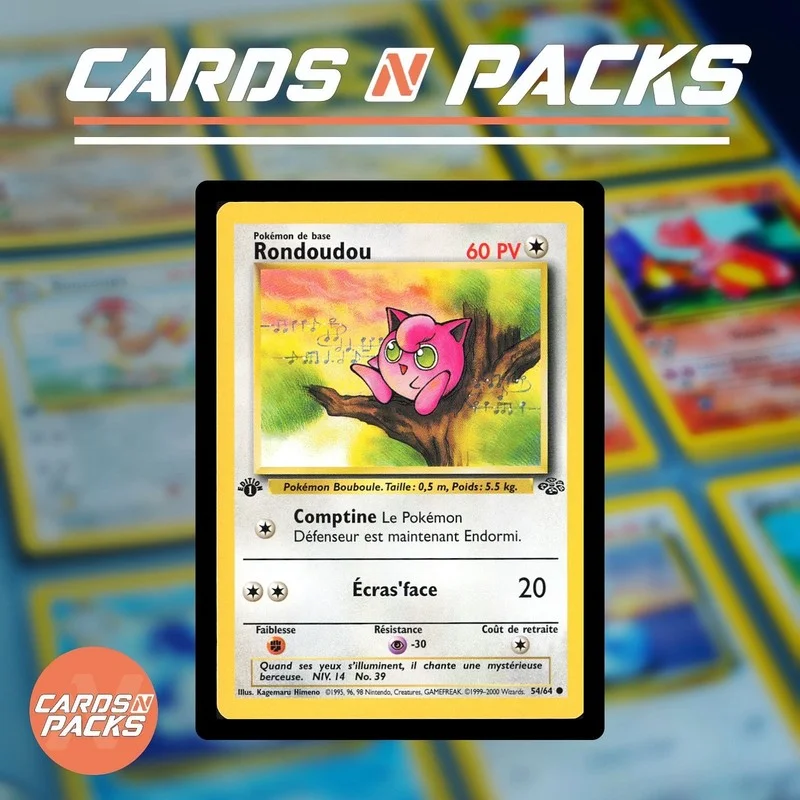
Jigglypuff, the Balloon Pokémon, is famous for its melodious voice which has the unique ability to lull anyone who hears it to sleep. This card, number 54/64, comes from the Jungle expansion, the second set of Pokémon Trading Card Game cards to be released in the West. The Jungle expansion introduced 48 new Pokémon from the first generation, significantly expanding the pool of available creatures after the Base Set.
The Jigglypuff 54/64 card is a common, non-holographic card from this iconic expansion. It is particularly sought after in its '1st Edition' version, recognizable by its distinctive stamp. The artwork for this card is by Atsuko Nishida, an emblematic artist who helped define the aesthetic of the Pokémon TCG from its very beginnings. Her soft and recognizable style perfectly captures Jigglypuff's personality, presenting it in a characteristic pose that evokes tenderness and serenity.
This card represents a piece of history for collectors and fans, bearing witness to the early years of the Pokémon TCG phenomenon. It embodies the simplicity and charm of the original cards, before the introduction of more complex game mechanics and elaborate designs. The 1st Edition version of Jungle is particularly valued for its rarity compared to unlimited versions.
Fun facts
- Jigglypuff is one of the most recognizable Pokémon from the first generation, frequently appearing in the anime where it tries to make others sing along to its melody.
- The Jigglypuff 54/64 card from the Jungle expansion, although common, is highly valued in its 1st Edition version for its place in Pokémon TCG history.
- Artist Atsuko Nishida is also credited with helping to design the original look of several iconic Pokémon, including Jigglypuff itself.
Collector's tip
For collectors, the card's condition is paramount. A 1st Edition Jigglypuff 54/64 card in excellent condition or graded will command a higher value. It is crucial to verify the '1st Edition' stamp on the left side of the artwork, just below the Pokémon, to ensure its authenticity. Unlike holographic cards, common cards like this can be harder to find in perfect condition due to their wider distribution and frequent use. Beware of counterfeits or misidentified cards. Investing in an authentic, well-preserved card from this era is always a good strategy.


