



History
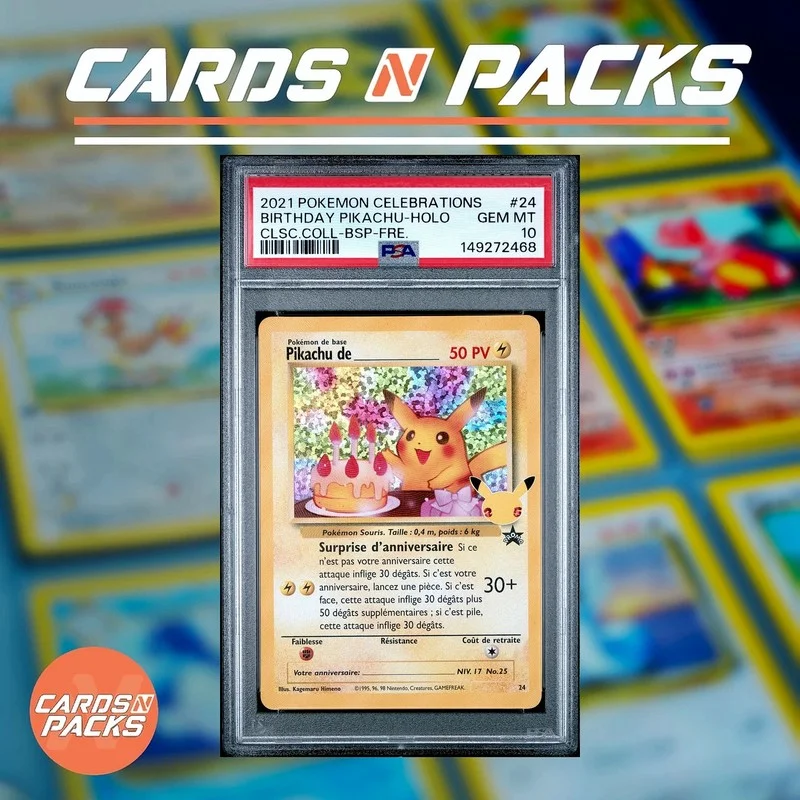
The Pikachu card number 24/25 from the Celebrations expansion is a vibrant tribute to one of the most recognizable icons of the Pokémon franchise. This special expansion, released to mark Pokémon's 25th anniversary, was designed to celebrate the rich history of the Trading Card Game by reprinting iconic cards and introducing new creations. The Pikachu 24/25 stands out with its holographic nature, capturing the sparkle and magic that defined the early Pokémon cards.
The artwork of this card is a faithful reproduction of the very famous Pikachu card from the original Base Set, which emerged with the beginnings of the Pokémon TCG. Illustrated by Mitsuhiro Arita, this iconic artwork features Pikachu in a classic, dynamic pose, reflecting the spirit of Pokémon adventure. The only notable difference from the original is the subtle presence of the 25th-anniversary logo, adding a unique and commemorative touch to this reprint.
This card is not just a collectible; it's also a piece of history, reminding collectors of Pikachu's enduring legacy and the evolution of the TCG over the decades. Its presence in the Celebrations set underscores its status as a universal mascot and the central role it has played in popularizing the Pokémon universe worldwide.
Fun facts
- The Pikachu 24/25 card from the Celebrations expansion is an exact replica, save for the 25th-anniversary symbol, of the Pikachu card from the original Base Set (number 58/102).
- The artwork for this card was created by Mitsuhiro Arita, an iconic artist who contributed to hundreds of classic Pokémon TCG cards, including the famous Base Set Charizard.
- The Celebrations set, which includes this card, was designed to commemorate the 25th anniversary of the Pokémon franchise, reprinting iconic cards from various eras with a modern twist.
Collector's tip
For this holographic Pikachu card from the Celebrations expansion, collectors should prioritize copies in perfect ("Mint") condition to maximize their future value. Carefully check for any scratches on the holographic surface and the back of the card, as well as the sharpness of