You rip open a Pokemon booster pack. You pull a shiny card. But is it a Holo? A Reverse Holo? A Full Art? A Special Illustration Rare? And most importantly: is it worth anything? If you have ever asked yourself that question, this article is for you.
The Pokemon TCG rarity system has changed enormously since the first boosters from the Wizard era in 1999. What was once a simple system — Common, Uncommon, Rare — has grown into a complex universe with more than a dozen different rarity tiers. And every new era of the game has added another layer of complexity, right up to the recent Mega Evolution set that introduced an entirely new tier: the Mega Hyper Rare, the hardest card to pull in TCG history.
This guide covers every existing rarity, from the most basic to the most elusive, with their symbol, their history, and the real odds of finding them in a booster pack. Whether you are a newcomer just getting started or a seasoned collector looking to organize your knowledge, you will find a comprehensive and up-to-date overview here.
The basics: Common, Uncommon, Rare
Since the very first Base Set in 1996 in Japan (and 1999 in the West), every Pokemon card has carried a rarity symbol in the bottom corner, right next to the set number. This system has never changed for the three base tiers:
- Common (● black circle) — The most common cards. A booster pack typically contains 4 to 5 of them. These are usually unevolved basic Pokemon, basic Energy cards or simple Trainer cards. Their individual value is negligible (a few cents), but they are essential for building a playable deck.
- Uncommon (◆ black diamond) — One step up. About 3 per booster. Often Stage 1 evolutions, useful Trainers or slightly stronger Pokemon. Typical value: $0.05 to $0.50.
- Rare (★ black star) — At least one Rare is guaranteed per booster. This is the minimum threshold for interesting cards: final-stage evolutions (Stage 2), Legendary Pokemon in non-holo form, or Trainers sought after for competitive play. Since Scarlet & Violet, all booster Rares are guaranteed to be Holo.
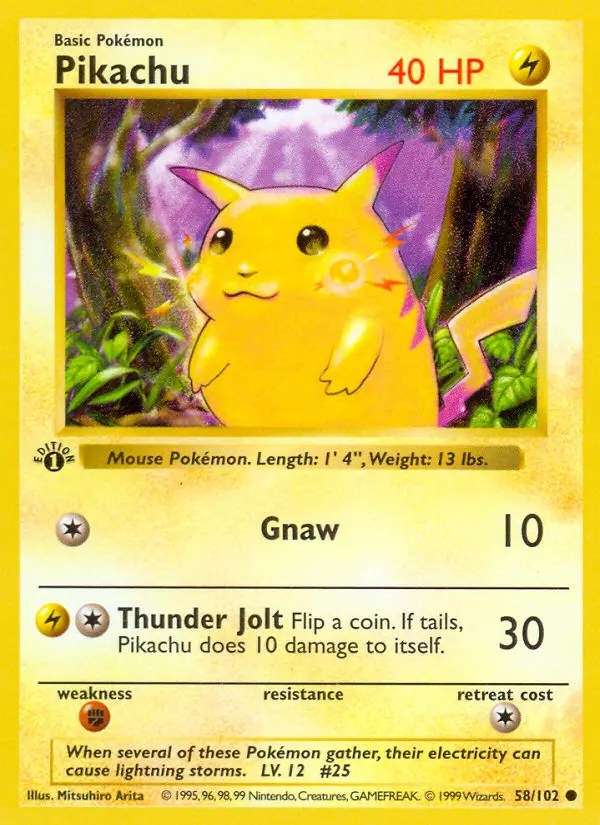
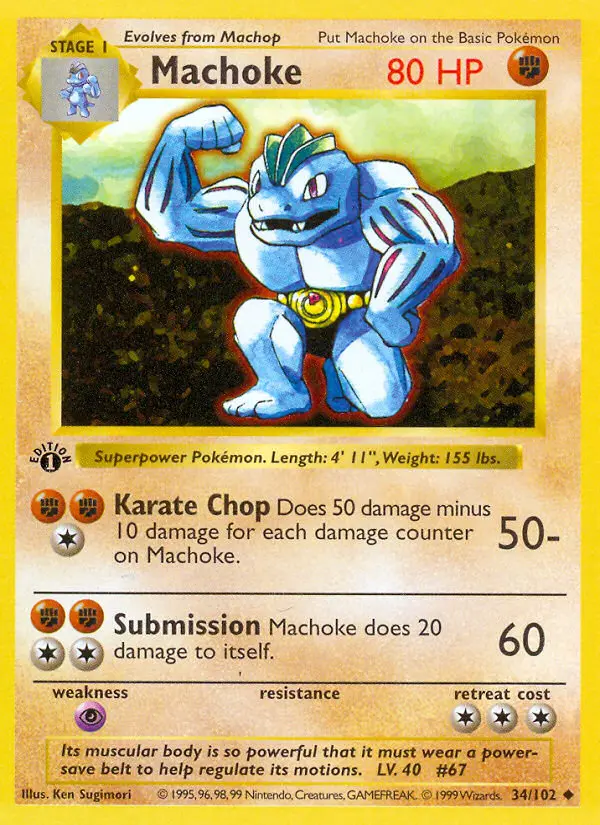
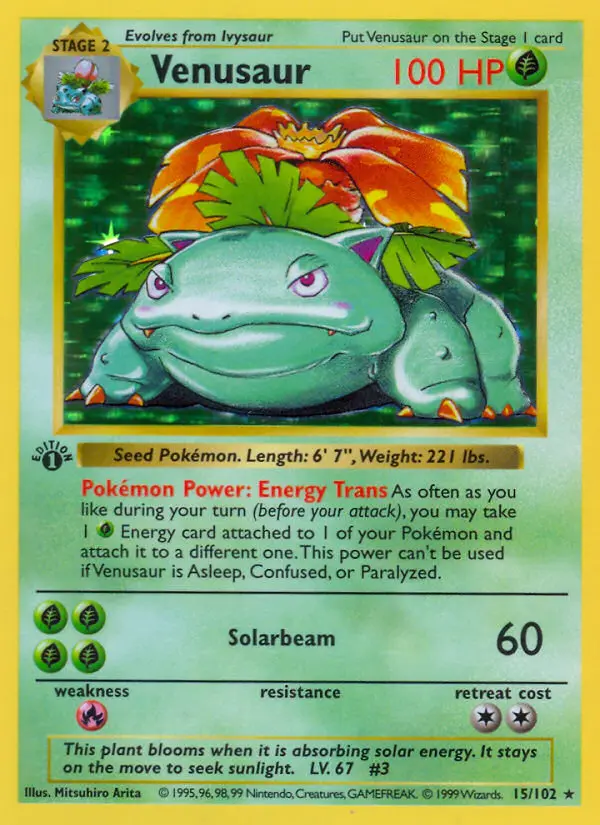
Until the early 2000s, this three-tier system was sufficient. The only extra distinction was whether a Rare card had a holographic effect or not. But things were about to get much more complicated with the introduction of Reverse Holos, then Ultra Rares, Full Arts, and everything that followed...
The Holo Rare: the original star
Holo Rare Card
The first "special" card in the Pokemon TCG. Present since the Base Set (1996/1999). The Pokemon illustration is covered with a holographic foil that shines and reflects light, while the rest of the card remains matte. This is the type of card that kicked off the Pokemon collecting craze.
The Holo Rare is the first form of premium rarity in the Pokemon TCG. In the original Base Set, only 16 out of 102 cards existed in holographic form — including the legendary Charizard by Mitsuhiro Arita that launched the entire Pokemon collecting frenzy. Those 16 holos included the three final-stage starters (Charizard, Blastoise, Venusaur), the Legendary birds (Mewtwo, Zapdos, Moltres), and other fan favourites like Alakazam, Snorlax and Chansey.
How do you spot one? It is simple: only the Pokemon illustration shines. The card frame, the attack text, the HP — everything else is printed normally, in matte. When you tilt the card under a light, only the artwork area reflects shimmering colours.
Holographic patterns through the ages
The holographic effect has evolved considerably over the years, and experienced collectors can identify a card's era just from its holo pattern:
- Cosmos Holo (1999-2002) — The original pattern from Base Set, Jungle and Fossil. Nicknamed "galaxy foil", it features a scattered pattern of stars and galaxies across the illustration. This is the most iconic and sought-after pattern among vintage collectors.
- Cosmos HD (2013+) — A modernized version of the cosmos pattern, with more defined circles and dots. Used in promotional products and certain special sets.
- Parallel lines / Mirror — A pattern of shiny horizontal or vertical lines. Frequently used in the Diamond & Pearl and Black & White eras.
- Modern Holo (Scarlet & Violet) — A more subtle and uniform holo effect, perfectly calibrated. Since the launch of SV, all Rare cards in boosters are Holo.
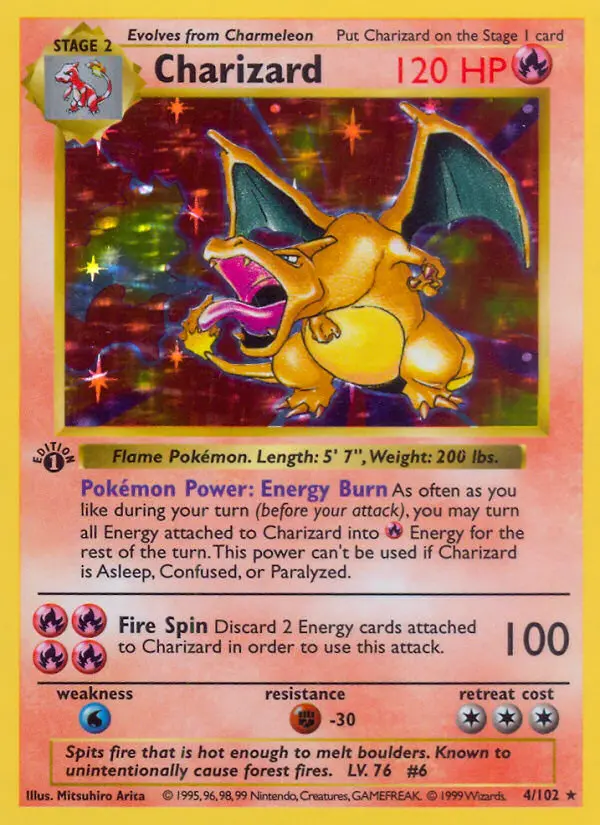
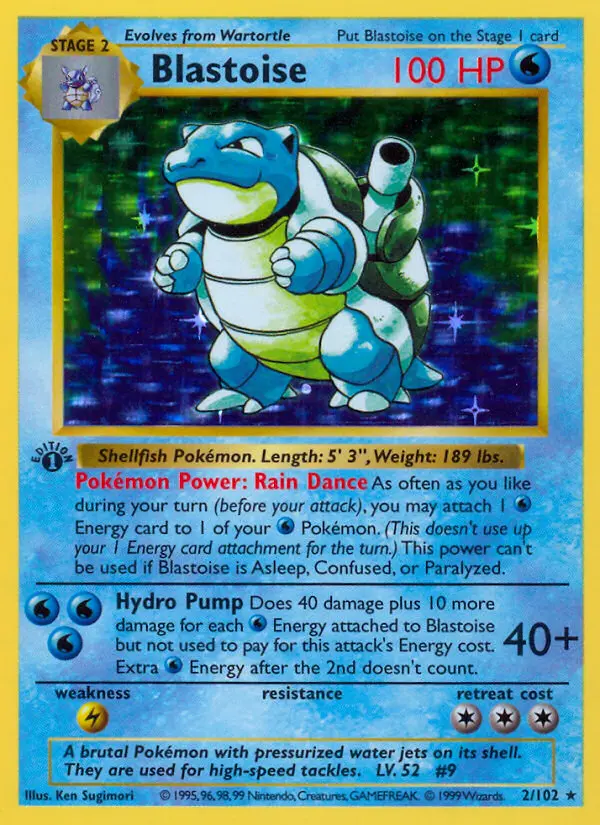
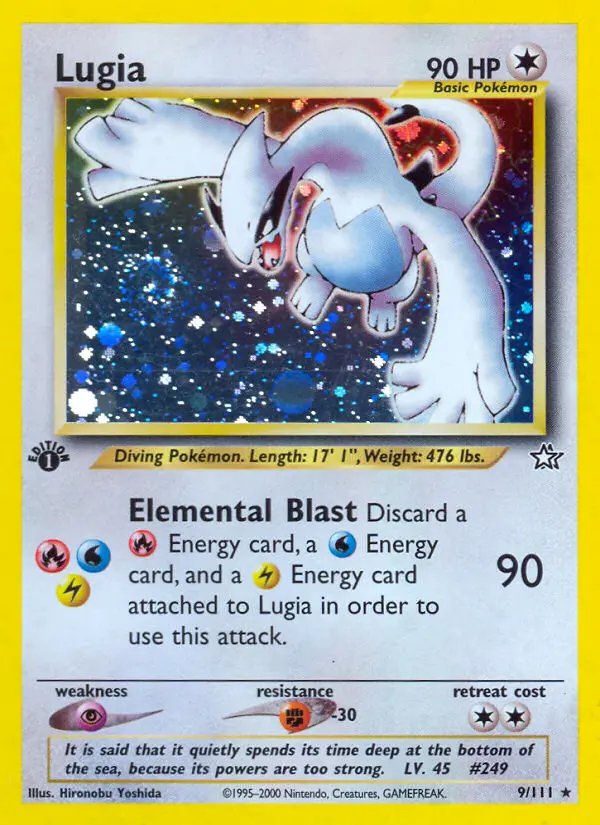
During the Wizard era (1999-2003), Holo Rares were the most sought-after cards in every set. There were no Full Arts or Ultra Rares yet. The Holo Rare was the holy grail. Today, vintage Holo Rares in good condition — especially in 1st Edition — have become collectible pieces worth hundreds or even thousands of dollars. A 1st Edition Base Set Charizard Holo graded PSA 10 has surpassed $300,000 at its peak. To explore that era further, check out our complete Wizard era guide.
The Reverse Holo: holographic in reverse
Reverse Holo Card
Introduced in 2002 with the Legendary Collection set. The concept is the exact opposite of a Holo: the card frame is holographic, while the Pokemon illustration remains matte. One Reverse Holo has been guaranteed in every booster pack since its introduction.
The Reverse Holo concept was born at Wizards of the Coast, who had already experimented with it in Magic: The Gathering (Urza's Legacy, 1999). The idea was brilliant: give every card in a set a collectible version, not just the Rares. It is a powerful collecting tool that added depth and replayability to the booster-opening experience.
In practical terms, a Common can exist as a Reverse Holo, so can an Uncommon, and even a Rare. The card's rarity symbol does not change — a Common Reverse Holo is still a Common. It is simply an alternative version with a holographic treatment on the frame, the Pokemon name, text areas and sometimes the card background.
Holo Card
The Pokemon illustration shines. The frame is matte. Reserved for Rare cards. Harder to pull than a Reverse Holo. This is the classic premium finish.
Reverse Holo Card
The card frame shines. The illustration is matte. Exists for all rarities (C/UC/R). One per booster. Creates a complete parallel set.
Reverse Holos from the Legendary Collection set (2002) are particularly sought-after: they feature a unique fireworks pattern found in no other set. This pattern explodes in shimmering colours and gives the cards a spectacular look. A Legendary Collection Reverse Holo Charizard in good condition can sell for several hundred or even thousands of dollars. It is one of the most coveted cards from the pre-modern era.

Power mechanics: EX, GX, V, VMAX, VSTAR, ex
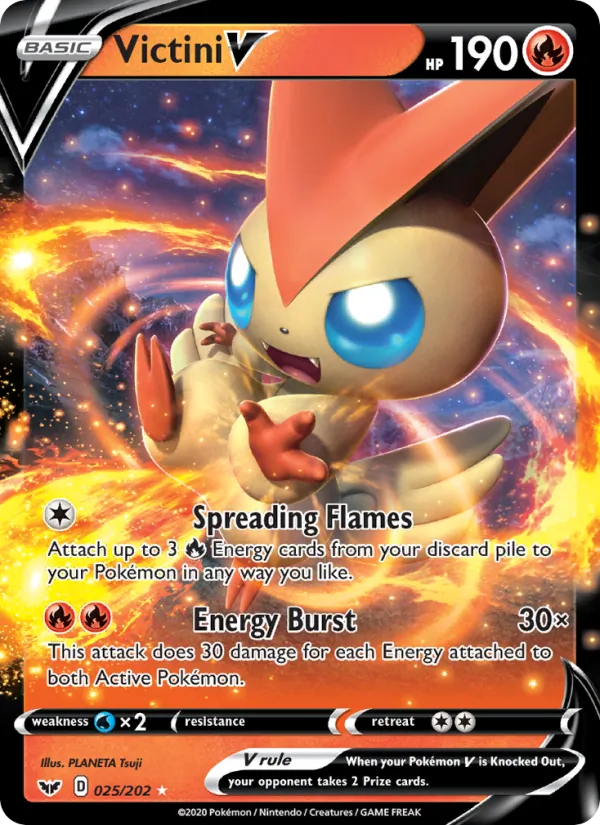
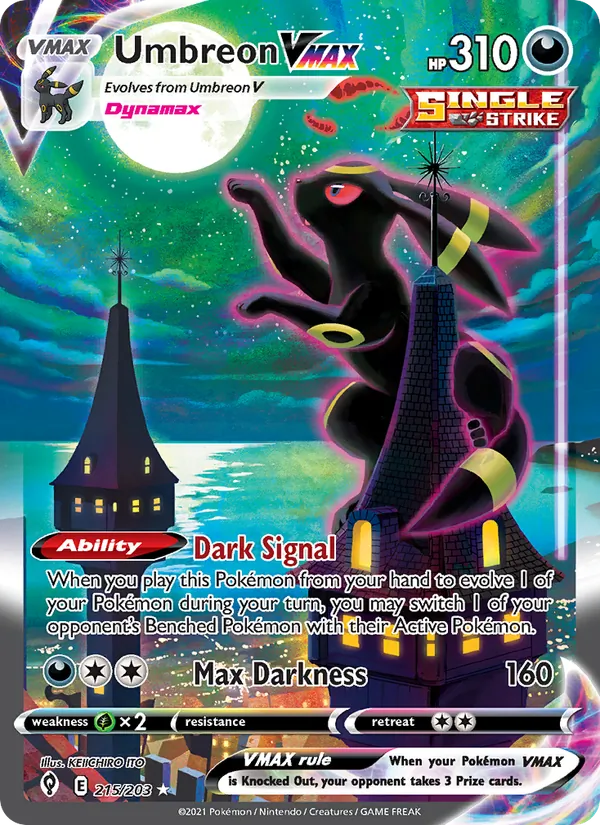
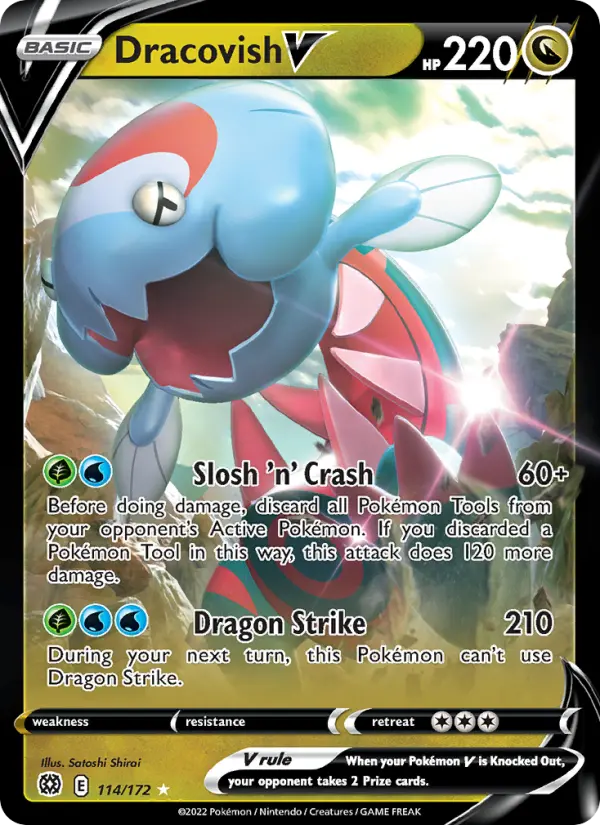
Starting in 2003, The Pokemon Company began introducing special game mechanics that became inseparable from the rarity system. These cards are more powerful than average, but they give 2 or 3 prize cards to the opponent when knocked out. Understanding these mechanics is essential to avoid confusing them with rarity tiers.
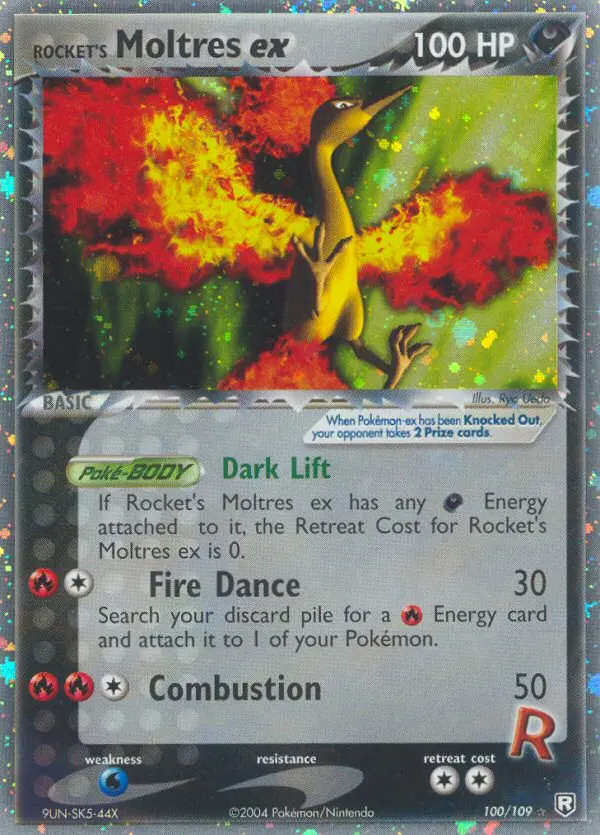
Full Arts: the illustration takes over the card
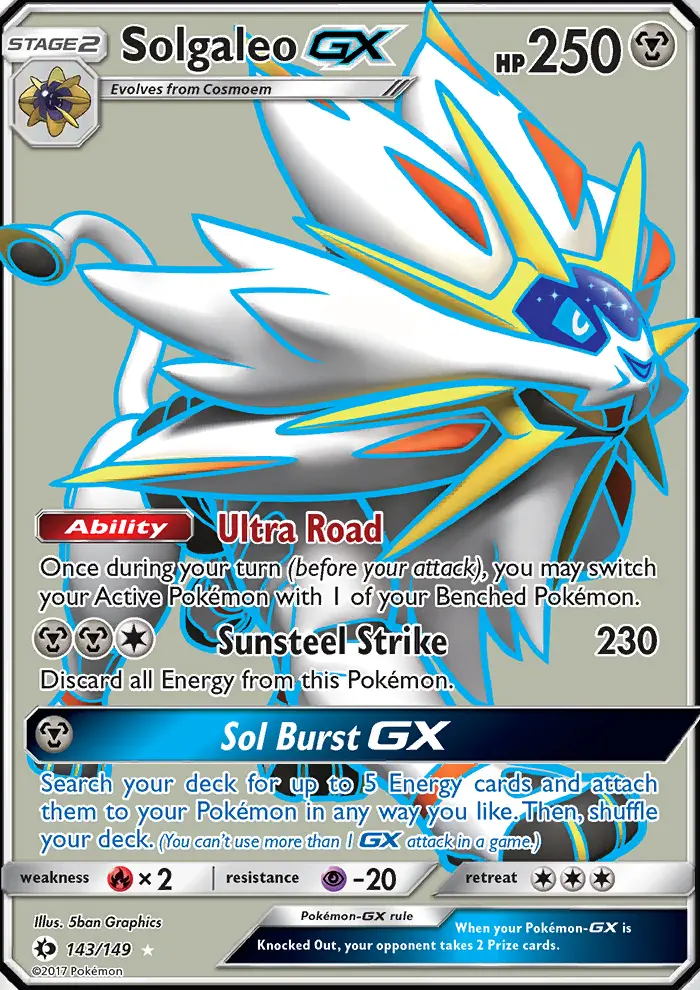
Full Art cards were introduced with the Black & White expansion in 2011. The concept: instead of confining the illustration to the traditional art window, the Pokemon artwork extends across the entire surface of the card. The classic frame partially or completely disappears, giving way to a borderless artistic vision.
Full Art Cards
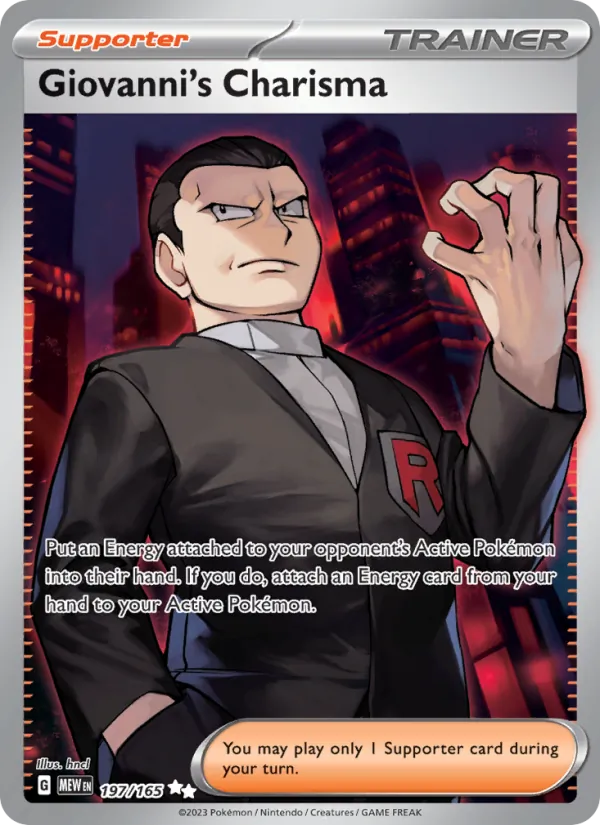
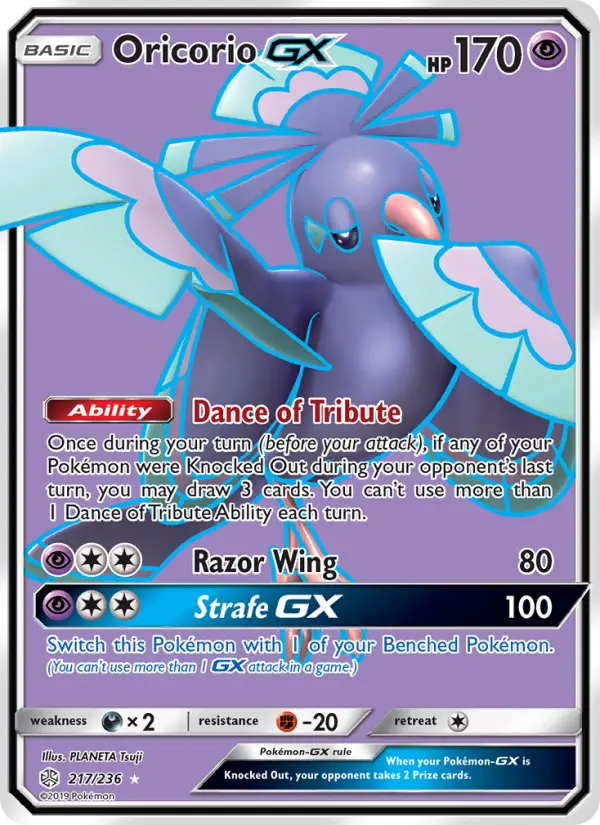
Full-format illustrations with embossed texture. Available for Pokemon-EX, GX, V, VSTAR and now Pokemon-ex. Supporter (Trainer) cards can also exist as Full Arts, and certain Supporter Full Arts are among the most expensive cards in modern sets. Identified by two silver stars (Ultra Rare) in the current system.
Full Arts stand out from regular cards through several fundamental characteristics:
- Extended illustration — The Pokemon is drawn large, without the traditional art window. The artwork covers the entire card surface.
- Embossed texture — Run your finger across the card: you can feel lines, patterns, an embossing. This is an important authenticity marker (counterfeits often have incorrect or absent texture). The texture is unique to each card.
- Full holographic effect — The entire card is holographic, not just the illustration. The reflection is more subtle and uniform than on a classic Holo.
- Official illustration — A classic Full Art uses the Pokemon's official pose, enlarged and stylized. This is what distinguishes it from an Alt Art / Special Illustration Rare, which uses an alternative illustration.
- Often a solid or minimalist background — Unlike Alt Arts that show elaborate settings, Full Arts typically have a solid or minimalist background (lines, geometric patterns).
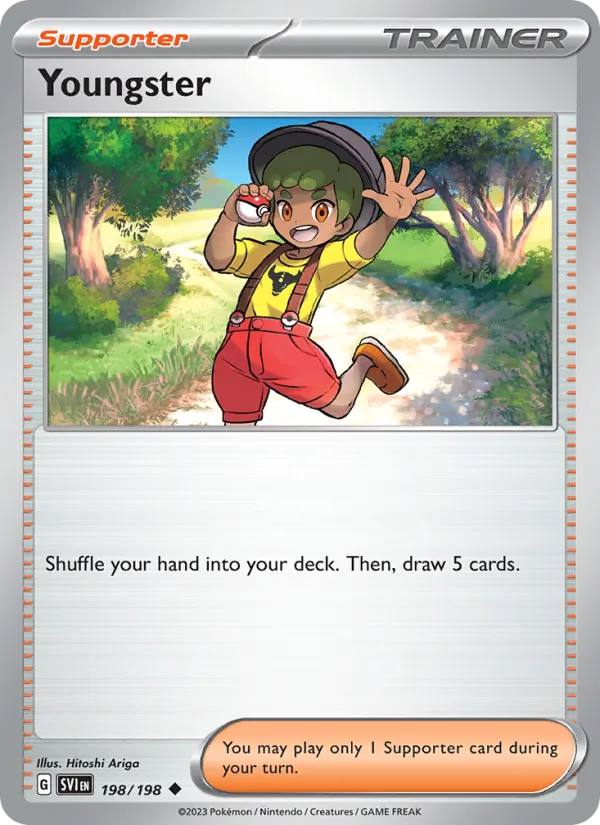
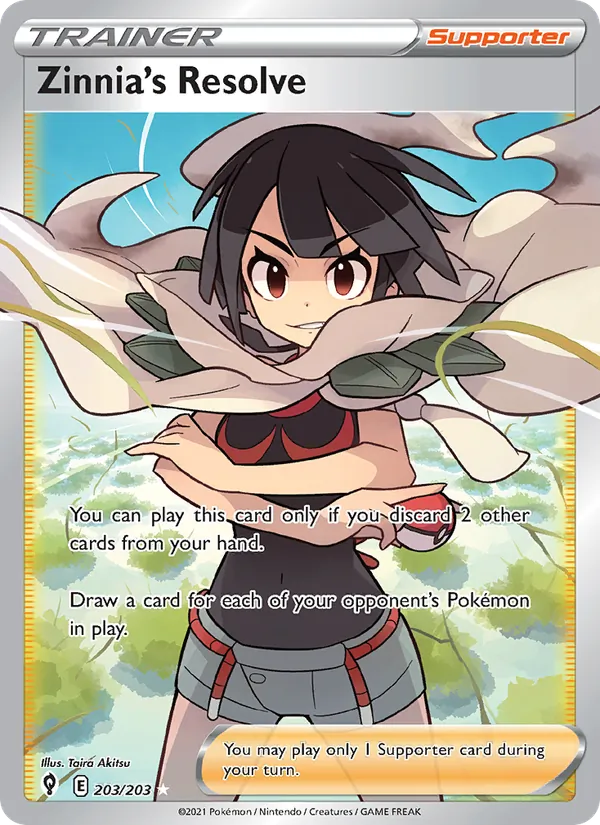
Supporter Full Arts: a highly sought-after sub-genre
Supporter (Trainer) Full Art cards have become a market segment in their own right. Characters like Lillie, Marnie, Cynthia or Serena in Full Art regularly command high prices, sometimes exceeding those of Pokemon themselves. The reason: these cards depict popular franchise characters with exclusive illustrations, and their appeal extends beyond competitive play to reach fans of the Pokemon universe as a whole.
For collectors looking to invest in Pokemon cards, Full Arts represent a good balance between rarity and accessibility. They are significantly rarer than classic Holos, but more affordable than Alt Art / Special Illustration Rare cards.
Alt Art, Illustration Rare, Special Illustration Rare: the pinnacle of collecting
This is where things get truly exciting for collectors. Alternative illustrations have become the most sought-after and most valued cards in the modern Pokemon TCG. They represent the perfect convergence of extreme rarity, exceptional artistic quality and universal desirability. Their history falls into two distinct eras.
The Sword & Shield era: Alt Arts (2020-2023)
The "Alt Art" (alternative illustration) cards emerged during the Sword & Shield era (2020-2023). The concept, inherited from the Japanese market where they are called "Character Rare" and "Character Super Rare", is telling: a completely different illustration from the Pokemon's official art, often in a unique artistic style, showing the Pokemon in an everyday or natural setting, sometimes interacting with other Pokemon or humans.
The Evolving Skies set became legendary for its Alt Arts: Rayquaza V Alt Art, Umbreon VMAX Alt Art (nicknamed "Moonbreon" by the community), Dragonite V Alt Art... These cards soared to several hundred or even thousands of dollars. The Umbreon VMAX Alt Art is regularly cited as the most iconic modern card of the last decade.
The Scarlet & Violet era: Illustration Rare and Special Illustration Rare (2023-present)
With the launch of Scarlet & Violet in March 2023, The Pokemon Company restructured the entire rarity system and gave alternative illustrations their own official symbols and designations. The informal "Alt Arts" were renamed and split into two distinct categories with dedicated new symbols:
Illustration Rare (IR)
1 gold star. Alternative full art illustrations of Common, Uncommon and Rare Pokemon (no Pokemon-ex). Equivalent of "Art Rare" (AR) in Japan. Beautiful illustrations showing Pokemon in nature, in their habitat, playing with other creatures. Relatively accessible (1 in ~30 boosters).
Special Illustration Rare (SIR)
2 gold stars. The most sought-after cards of the modern era. Alternative illustrations of Pokemon-ex and Supporters. Equivalent of "Special Art Rare" (SAR) in Japan. Premium extra texture, gold leaf, elaborate hand-painted settings. Extremely rare (1 in ~45 to ~101 boosters depending on set).
Special Illustration Rare (SIR) Pull Rates
The odds of finding a SIR vary considerably between sets. Here are the figures compiled by the community from tens of thousands of openings:
These numbers speak for themselves. If you want a specific SIR — say the Charizard-ex SIR from a given set — your odds can drop to 1 in 465 boosters in some sets. That is about 13 booster boxes of 36 packs. At roughly $4 per booster, that represents a theoretical investment of more than $1,800 in boosters for a single chance at pulling it. That is exactly why the most sought-after SIRs sell directly on the secondary market at premium prices. For help choosing the right boosters, see our guide on which Pokemon booster to buy in 2026.
Hyper Rare, Gold, Secret Rare: cards beyond the set
Secret Rare: an impossible number
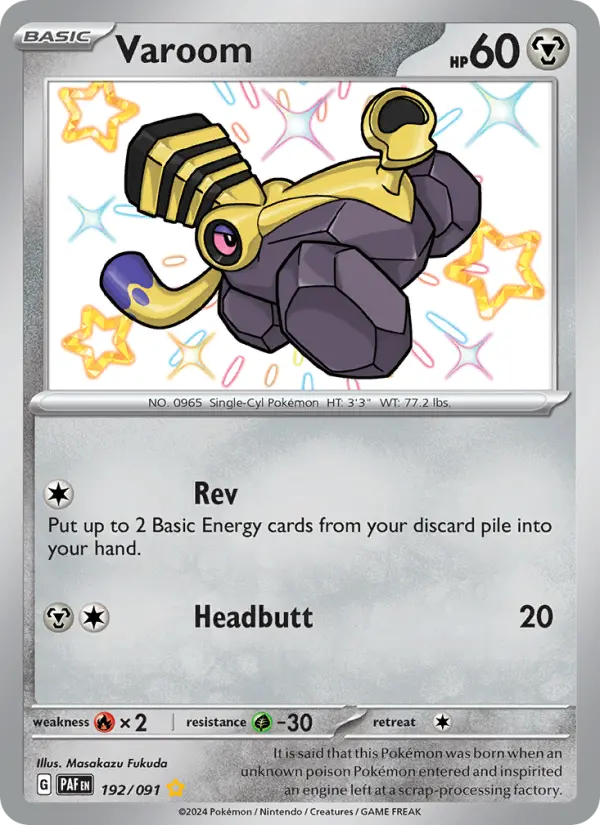
A "Secret Rare" card is identifiable by one simple detail: its collection number exceeds the total card count of the set. For example, a card numbered 224/198 is a Secret Rare — it is card number 224 in a set that "officially contains" only 198. These are bonus cards that do not appear in the official set list.
This concept has existed since the Team Rocket set (April 2000), with the Dark Raichu card numbered 83/82 — the very first Secret Rare in Pokemon TCG history. At the time, it was a genuine Easter egg hidden in the set, and players who found it were stunned to see an "impossible" number.
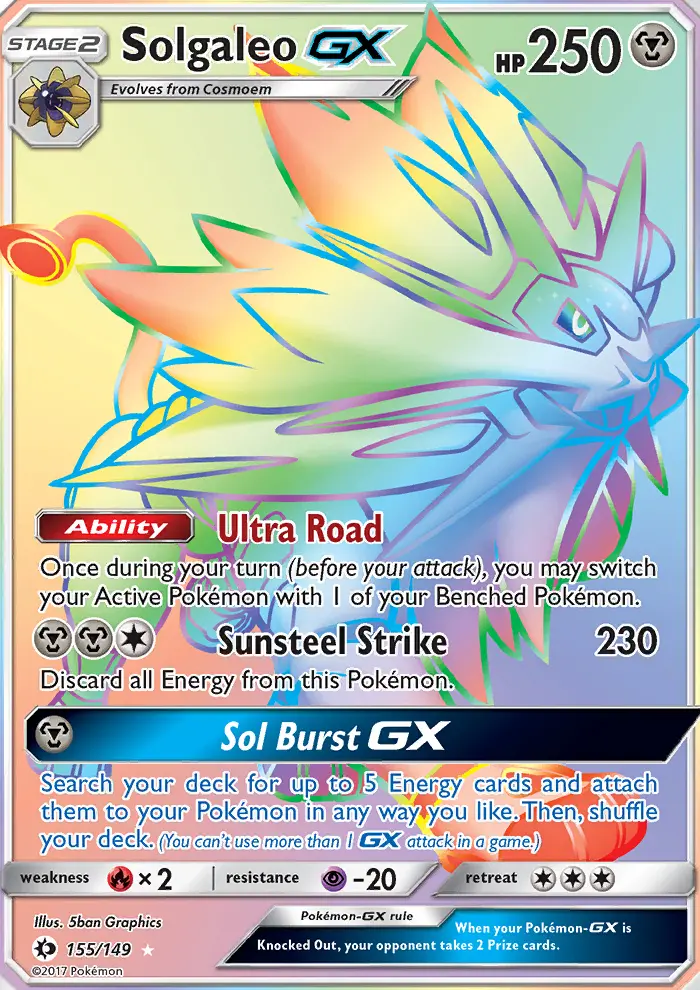
Rainbow Rare: the ephemeral rainbow (2017-2023)
Introduced with Sun & Moon (2017), Rainbow Rares are rainbow-coloured versions of GX, VMAX and VSTAR cards. They use the same illustration as the Full Art, but with a multicolour chromatic treatment and a distinctive embossed texture. The visual effect is striking: every colour of the spectrum blends across the card's surface.
Rainbow Rares were permanently discontinued with the arrival of Scarlet & Violet in 2023. They no longer exist in modern sets, replaced by gold Hyper Rares. This decision was welcomed by some in the community who found Rainbow Rares less visually appealing than Alt Arts, but lamented by others who appreciated their unique look. Existing Rainbow Rares nevertheless retain their collectible value.
Hyper Rare / Gold: the supreme rarity
Hyper Rare Card (Gold)
The rarest cards you can pull from a standard booster pack. Entirely gold with an extra layer of glitter, they offer an unmatched premium feel. Since Scarlet & Violet, they carry the three gold star symbol. Can feature Pokemon-ex, items (Luxury Ball, Deluxe Vacuum), Stadiums and basic Energies.
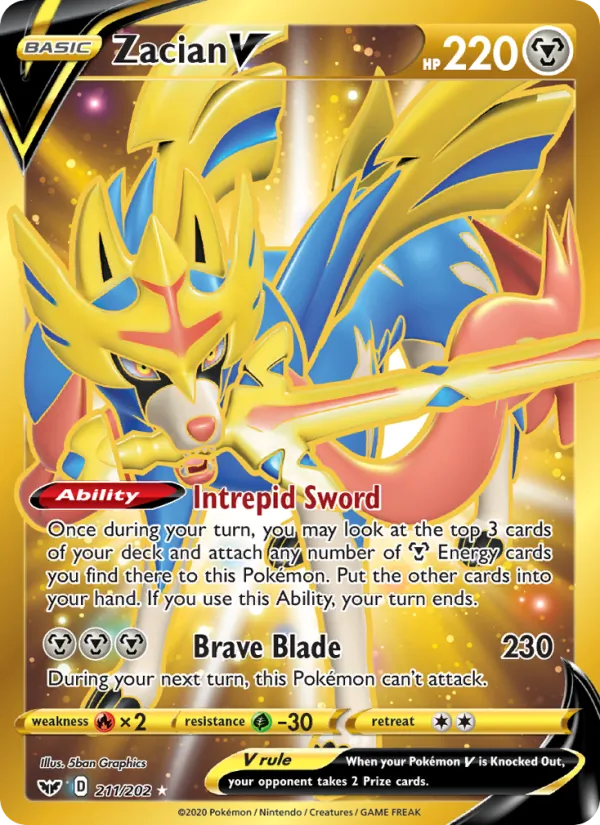
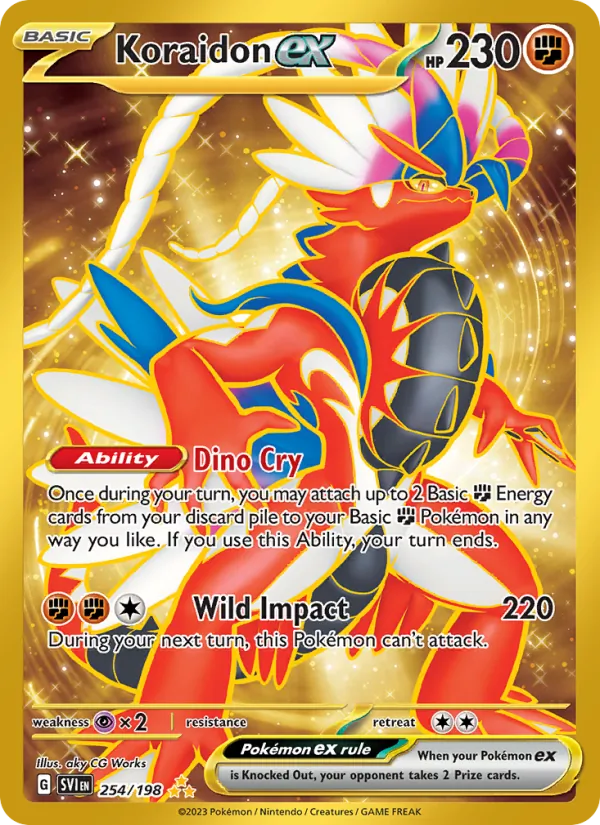
Hyper Rares are sometimes the most expensive cards in a set, sometimes not — it depends entirely on the card. A gold basic Energy is technically a Hyper Rare (3 gold stars), but it will often be less expensive than a Special Illustration Rare of a popular Pokemon like Charizard or Rayquaza. Value is driven as much by the Pokemon or item depicted as by technical rarity. That said, certain Hyper Rares like the Charizard-ex Gold or the Pikachu-ex Gold reach stratospheric prices.
Trainer Gallery and Character Rare: the art of the encounter
Trainer Gallery cards are a special subset that appeared during the Sword & Shield era (2022-2023). They form a "set within the set": a series of cards with their own numbering (TG prefix), depicting Pokemon alongside their iconic Trainers in unique full art illustrations.
Trainer Gallery Cards
Present in Brilliant Stars, Lost Origin, Silver Tempest and Crown Zenith from the Sword & Shield era. These cards show the bond between a Trainer and their signature Pokemon — for example, Leon with his Charizard, or Cynthia with her Garchomp. Roughly 120 Trainer Gallery cards were produced across 4 sets.
Trainer Gallery cards fall into two sub-categories inherited from the Japanese market:
- Character Rare (CHR) — Full art cards showing a non-holo or Stage 1 Pokemon alongside a Trainer. More accessible, with a reasonable pull rate.
- Character Super Rare (CSR) — Premium full art cards showing a Pokemon V or VMAX with its Trainer. Rarer and more expensive, with even more elaborate illustrations and embossed texture.
Trainer Gallery cards were discontinued with the transition to Scarlet & Violet. No SV-era set includes them. This discontinuation makes them increasingly sought-after by collectors, as no new cards of this type are being produced. Sets like Silver Tempest, the last set to include a Trainer Gallery, are seeing their values rise steadily.
ACE SPEC: the magenta-bordered cards
ACE SPEC cards are a category apart within the rarity system. Reintroduced with the Temporal Forces set in March 2024, they originally existed in the Black & White era (Boundaries Crossed, 2012). The concept: Trainer or Energy cards with extremely powerful effects, but limited to one per deck.
ACE SPEC Cards
Instantly recognizable by their distinctive magenta (pink-purple) border and their magenta star rarity symbol. Exclusively Trainer (Item) or Special Energy cards. Their power is balanced by the restriction of one ACE SPEC per deck. Cards like Prime Catcher, Survivor's Guilt or Maximum Belt have become staples of competitive play.
ACE SPEC cards do not fit neatly into the standard rarity hierarchy. They have their own symbol (magenta star, not black or gold) and their own pull rate. At roughly 1 ACE SPEC per 21 boosters, they are more common than Ultra Rares or Illustration Rares, but their uniqueness within a deck and their impact on competitive play give them significant value for players.
Mega Hyper Rare: the new absolute pinnacle (2025)
In September 2025, The Pokemon Company made waves by introducing an entirely new rarity tier with the Mega Evolution set: the Mega Hyper Rare (MHR). These are, quite simply, the hardest cards to pull from a booster pack in the entire history of the Pokemon TCG.
Mega Hyper Rare Card (MHR)
One tier above the Hyper Rare. Mega Hyper Rares are entirely gold cards with a unique monochromatic gold design, exclusively reserved for Mega Evolution Pokemon. Unlike standard Hyper Rares (which are gold versions of existing illustrations), MHRs feature a unique original artwork. Their secondary market price sits between $500 and $600 at launch.
The numbers are staggering. With a pull rate of 1 in 1,260 boosters, you would statistically need to open about 35 booster boxes (roughly 6 cases) to hope to find a single Mega Hyper Rare. This represents the most extreme rarity ever seen in a Pokemon booster product, 7 times rarer than the rarest Gold cards from the standard Scarlet & Violet series.
The Mega Evolution set also marks the long-awaited return of Mega Evolutions to the TCG, a mechanic beloved by fans that had disappeared since the XY era. The Mega Hyper Rares feature iconic Mega Pokemon like Mega Charizard X, Mega Gardevoir-ex or Mega Rayquaza-ex in a sumptuous gold design.
Complete rarity table (Scarlet & Violet era, 2023-2026)
Since March 2023, the Pokemon TCG uses a system of 9 clearly identified rarity tiers with distinct symbols. Here is the exhaustive table, from most common to rarest:
| Rarity | Symbol | Description | Examples |
|---|---|---|---|
| Common | ● (black circle) | Basic cards, ~4-5 per booster | Unevolved Pokemon, Energies |
| Uncommon | ◆ (black diamond) | One step up, ~3 per booster | Stage 1 evolutions, Trainers |
| Rare | ★ (1 black star) | 1 guaranteed per booster, always Holo since SV | Final evolutions, non-ex Legendaries |
| Double Rare | ★★ (2 black stars) | Replaces the guaranteed Rare, always Holo | Pokemon-ex (standard version) |
| ACE SPEC Rare Strategy | ★ (1 magenta star) | Ultra-powerful Trainers/Energies, 1/deck max | Prime Catcher, Maximum Belt, Hero's Cape |
| Ultra Rare Premium | ★★ (2 silver stars) | Full Art with embossed texture | Pokemon-ex Full Art, Supporter Full Art |
| Illustration Rare Art | ★ (1 gold star) | Alternative illustration, full art, secret | Art Rare (AR) in Japan |
| Special Illustration Rare Chase | ★★ (2 gold stars) | Premium alt. illustration of Pokemon-ex/Supporter | Special Art Rare (SAR) in Japan |
| Hyper Rare Gold | ★★★ (3 gold stars) | Entirely gold, gold background, secret | Pokemon-ex, Items, Energies in gold |
What does a modern booster pack contain?
Understanding rarities also means understanding how they are distributed within a booster. Here is the composition of a standard Scarlet & Violet booster (10 game cards + 1 code/energy card):
Scarlet & Violet Booster Composition
The rare slot (last card in the booster, at the back of the pack) can contain:
- Rare Holo (★) — the most common outcome. Since SV, all booster Rares are Holo.
- Double Rare (★★) — a standard Pokemon-ex. Always exciting to pull.
- Ultra Rare (★★ silver) — a textured Full Art. A great pull.
- Hyper Rare (★★★ gold) — a gold card. Jackpot.
Illustration Rare and Special Illustration Rare cards occupy a separate slot: they replace the Reverse Holo or appear in addition to the Rare card. In other words, when you pull an IR or a SIR, you still get your Rare in the usual slot, plus the special card as a bonus. That is why boosters containing these cards seem "better" — they effectively contain an extra premium card.
ACE SPEC cards also replace a non-rare slot. They do not affect your guaranteed Rare. That is why it is theoretically possible (but extremely unlikely) to get an ACE SPEC and a Hyper Rare in the same booster.
The evolution of rarities, era by era
To put the evolution of the system in perspective, here is how rarities have stacked up over the decades. Each era added its own layer of complexity, reflecting market developments and the growing expectations of collectors:
WotC Era (1999-2003)
3 rarities: Common, Uncommon, Rare. The only premium distinction was whether a card had a holo or not. 1st Editions are print run variants, not rarities. The first Secret Rare (Dark Raichu) appeared in 2000.
EX/DP Era (2003-2011)
4-5 rarities: Addition of Pokemon-ex, Lv.X, and regular Secret Rares. The Legendary Collection introduced Reverse Holos (2002). The Gold Star cards from the EX era were the first ultra-rare "chase cards" with unique full-art illustrations.
BW/XY Era (2011-2017)
6-7 rarities: Birth of Full Arts (Black & White, 2011). Uppercase Pokemon-EX. BREAK and Mega Evolutions. Supporter Full Arts became highly sought-after. Gold Secret Rares became a regular feature.
SM/SwSh Era (2017-2023)
8-10 rarities: Pokemon-GX, V, VMAX, VSTAR. Rainbow Rares (2017). Trainer Gallery (2022). The Alt Arts from Sword & Shield became the most sought-after cards. Umbreon VMAX Alt Art is the iconic card of this era.
SV Era (2023-present)
9+ codified rarities: New system with clearly defined symbols. Illustration Rare and Special Illustration Rare replace Alt Arts. Gold Hyper Rares. ACE SPEC (2024). Mega Hyper Rare (2025). No more Rainbow Rares or Trainer Gallery.
We have gone from 3 rarities in 1999 to 9+ in 2026. And this inflation shows no signs of slowing down: the Mega Evolution set has already added a new tier. To understand how this phenomenon affects card values and how to guide your purchases, check out our article on Pokemon investment in 2026.
How to identify a card's rarity in 30 seconds
You have a card in front of you and want to know what rarity it belongs to? Here is the 5-step method, applicable to any card from any era:
- Look at the symbol at the bottom of the card — Circle, diamond, star(s). This is your starting point. Black, silver, gold or magenta stars indicate different tiers. If it is a circle, it is Common. If it is a diamond, it is Uncommon.
- Check the collection number — If the number exceeds the set total (e.g. 210/198), it is a Secret Rare. All Illustration Rares, Special Illustration Rares and Hyper Rares are Secret Rares.
- Observe the finish — Holo on the illustration only? It is a Holo Rare. Holo on the frame? It is a Reverse Holo. The entire card shines with an embossed texture? It is at least a Full Art (Ultra Rare). Magenta border? It is an ACE SPEC.
- Look at the background — Entirely gold background? It is a Hyper Rare (or Mega Hyper Rare). Alternative illustration with an elaborate setting? It is an Illustration Rare or SIR. Solid/minimalist background with official pose? It is a classic Full Art.
- Count the stars and their colour — 1 gold star = Illustration Rare. 2 gold stars = Special Illustration Rare. 3 gold stars = Hyper Rare. 2 silver stars = Ultra Rare (Full Art). 2 black stars = Double Rare. 1 magenta star = ACE SPEC.
Which rarity is worth the most?
As a general rule, the value hierarchy follows the rarity hierarchy — but with important exceptions worth understanding. Here is the typical ranking for a modern Scarlet & Violet era card, from least to most expensive:
- Common / Uncommon — A few cents. Even as Reverse Holos, the value rarely exceeds $0.20.
- Rare Holo — $0.50 to $5 depending on the Pokemon and competitive demand.
- Reverse Holo (of a Rare card) — $0.30 to $3. Sometimes more for out-of-print sets.
- Double Rare (standard ex) — $1 to $10. Pokemon-ex of popular Pokemon (Charizard, Mewtwo) are at the top of the range.
- ACE SPEC Rare — $2 to $25. Value depends heavily on competitive play utility.
- Ultra Rare (Full Art) — $3 to $30. Popular Supporter Full Arts command the highest prices.
- Illustration Rare — $5 to $40. IRs of iconic Pokemon are the most expensive.
- Hyper Rare (Gold) — $10 to $80. Gold Pokemon-ex are worth more than gold items.
- Special Illustration Rare — $15 to $300+. The top of the standard market. SIRs of Charizard or popular female Supporters reach the summit.
- Mega Hyper Rare — $400 to $600+. The new ceiling for the rarest modern cards.
But beware: the Pokemon depicted matters enormously in the equation. A Charizard SIR will always be worth more than a SIR of an obscure Pokemon. Likewise, a Hyper Rare of a game item (gold Luxury Vacuum, for example) can be worth less than an Illustration Rare of a popular Pokemon. The popularity of the Pokemon, its role in the video games and anime, and its demand among international collectors are factors just as decisive as technical rarity.