When people talk about Pokemon cards, most think of the Base Set, the holographic Charizard, Wizards of the Coast. But the story begins before all of that — in Japan, inside vending machines and packs of chewing gum. And almost nobody tells this story in English with the full picture.
This article traces the complete timeline of the very first Pokemon cards ever produced: from the Bandai Carddass to the Topsun gum cards, all the way to the Media Factory Base Set that would become the trading card game we know today.
The timeline at a glance
🎰 The Bandai Carddass: the very first Pokemon cards
Bandai Carddass Pocket Monster (1996)
The first commercially available Pokemon cards in the world. Not a game — just collectible cards. Distributed exclusively through vending machines (carddass machines) in Japan.
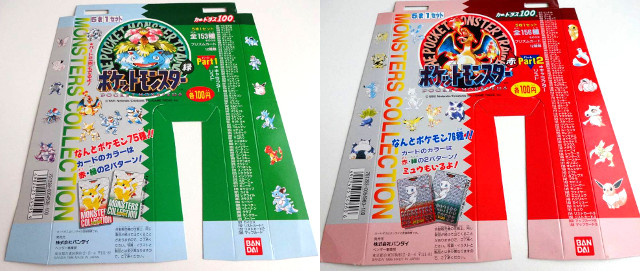
The name "Carddass" comes from "card" + "DAS" (inspired by AMeDAS, a Japanese weather system). The idea was to distribute information to children in card form. Bandai had already launched Carddass lines for other franchises (Dragon Ball, Gundam), and Pokemon was a natural addition to the catalog.
The cards reproduce the official illustrations by Ken Sugimori, the character designer for Pokemon Red and Green. They come in two versions: "Green" (Part 1) and "Red" (Part 2), referencing the two video games. Each series features all 151 original Pokemon, plus special cards (map cards and checklist cards).
Bandai went on to release two additional series (Part 3 and Part 4 in 1997), followed by Anime series (1998-2000) based on the animated show. In total, 958 Carddass cards were produced between 1996 and 2000.
✨ The rarest: Prism, Secret, and Jumbo
Among the 309 cards in Parts 1 and 2, 24 Prism cards (holographic) are the most sought-after pieces. There are also:
- Secret #000 Very rare — distributed in April 1997 at Ito-Yokado stores (a Japanese supermarket chain). Impossible to find in vending machines.
- Secret #CARDDASS Ultra rare — distributed in June 1997, even rarer still.
- Jumbo Pikachu Promo — an oversized promotional card given away at the Tokyo Toy Show 1997.
🍬 The Topsun cards: Pokemon in your chewing gum
Topsun Pokemon Gum Cards (1997)
Produced by Top-Seika, a Japanese confectionery manufacturer. 2 cards per gum pack, for about 60 yen (~$0.50). The cards are made of glossy coated cardboard that scratches extremely easily.
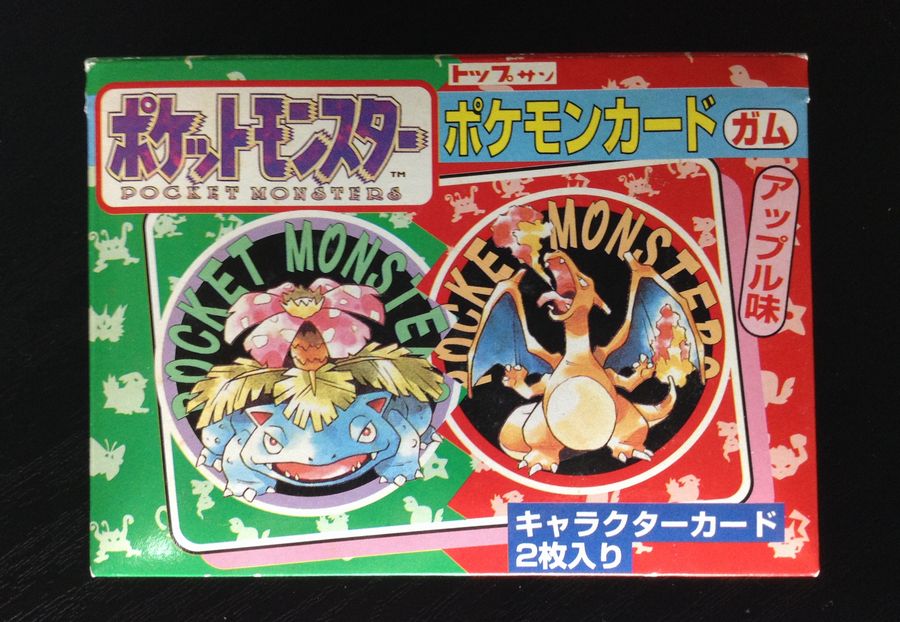
The date controversy: 1995 or 1997?
All Topsun cards bear the inscription "© 1995 Nintendo / Creatures inc. / GAME FREAK inc.". For years, grading services PSA and BGS dated them to 1995, which would have made them the very first Pokemon cards in the world — even earlier than the Bandai Carddass.
Blue back, green back, and no-number cards
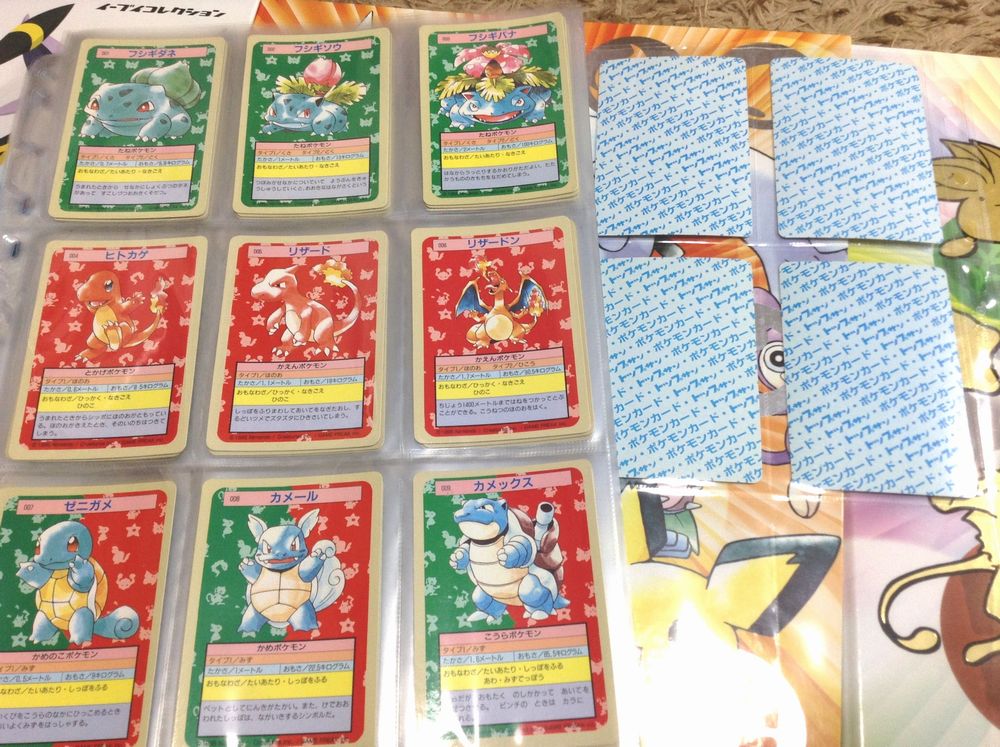
Topsun cards come in two back variants corresponding to two successive print runs:
Blue Back
First print run (March 1997). This is the oldest and most sought-after version. Some cards from this run have no number printed next to the Pokemon name — roughly 50 "no-number" variants have been identified. These error cards are the rarest Topsun of all.
Green Back
Second print run (from June 1997 onward). Introduced the 16 holographic Prism cards. All cards have their number. Less rare than the Blue Back, but the holographic Prisms from this print run remain highly coveted.
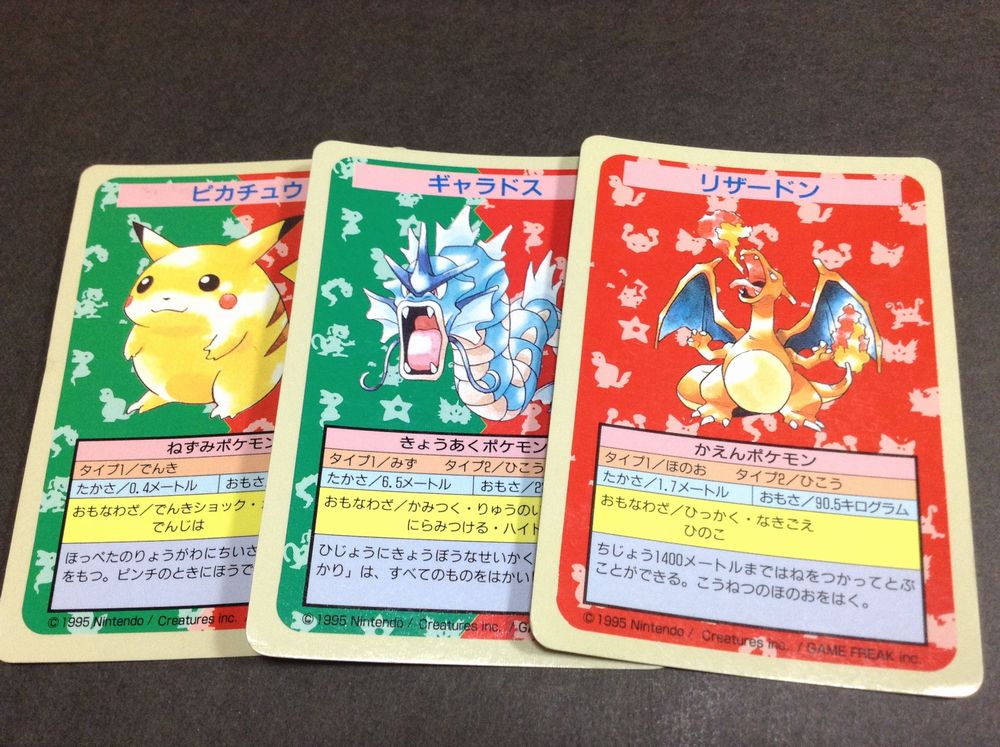
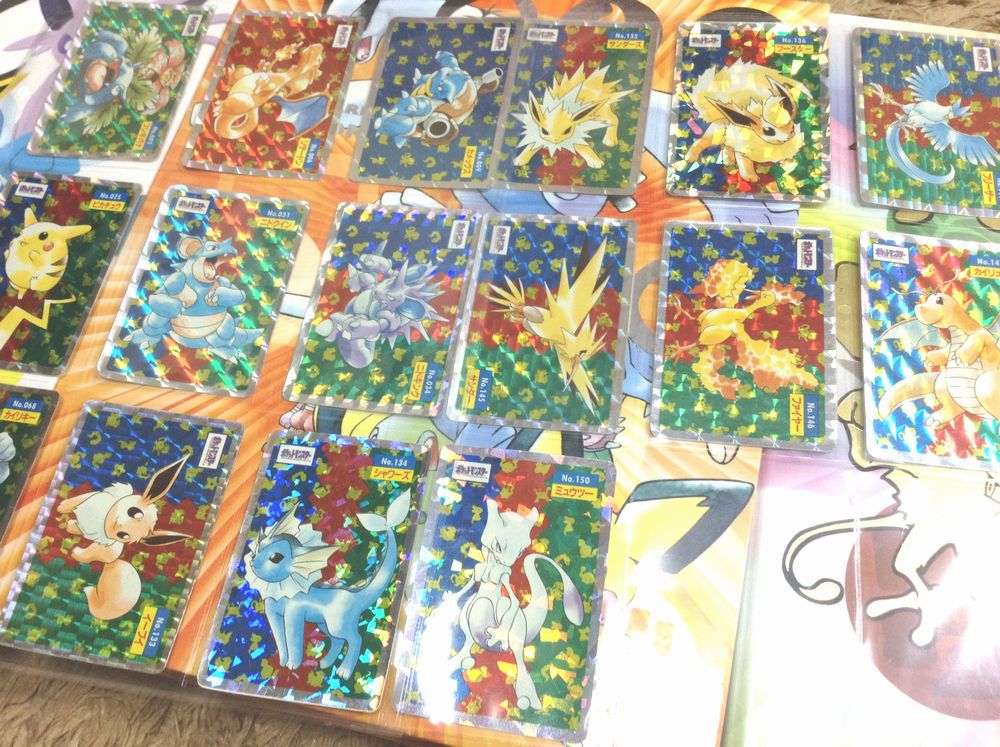
The glossy surface of Topsun cards makes them extremely prone to scratching. Add to that the fact they were shipped loose inside gum packs with no protection, and you understand why mint-condition copies are so rare. A Blue Back no-number Topsun Charizard in good shape is a museum piece.
🃏 The Japanese Base Set: birth of the Pokemon TCG
Pokemon Card Game — Expansion Pack (October 20, 1996)
The very first Pokemon trading card game. Published by Media Factory in Japan, designed by Creatures Inc. under the direction of Tsunekazu Ishihara (future president of The Pokemon Company). This was no longer just a collectible — it was a real game with rules.
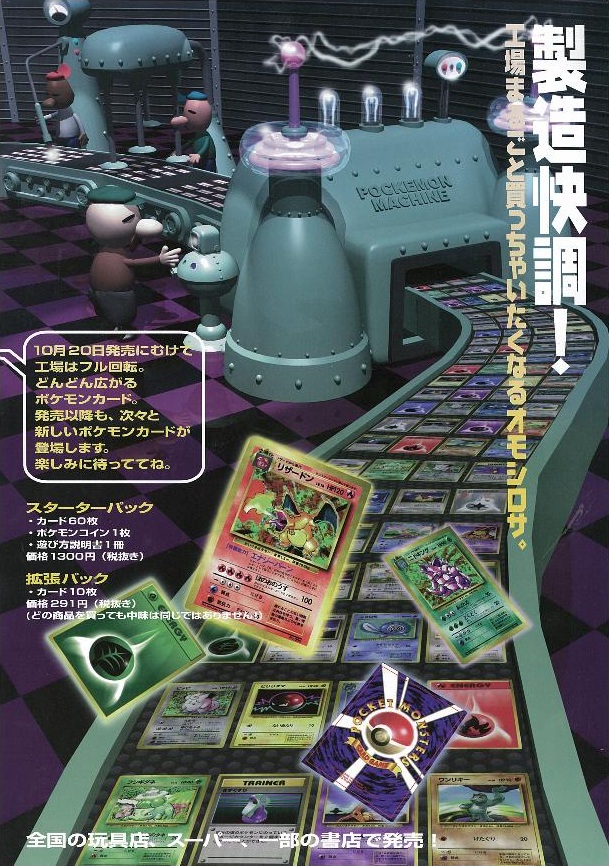
This is the set that started it all. Among its 102 cards, three holographics became global icons:
The illustrations were created by Mitsuhiro Arita (Charizard, Blastoise), Ken Sugimori (Venusaur), and Keiji Kinebuchi (energy cards).
What does NOT exist in the Japanese version
This is a crucial point that many collectors overlook:
Japan (Media Factory)
No "1st Edition." No "Shadowless." No "Unlimited." There is only one print run. All Japanese Base Set cards are identical, with no version distinction whatsoever.
USA / Europe (WOTC)
3 English variants: 1st Edition Shadowless, Shadowless (no stamp), and Unlimited (with shadow). The concept of 1st Edition was invented by Wizards of the Coast for the Western market.
France (WOTC)
2 French variants: 1st Edition and Unlimited. No Shadowless in French — all FR cards have a shadow. French print runs are significantly smaller than English ones.
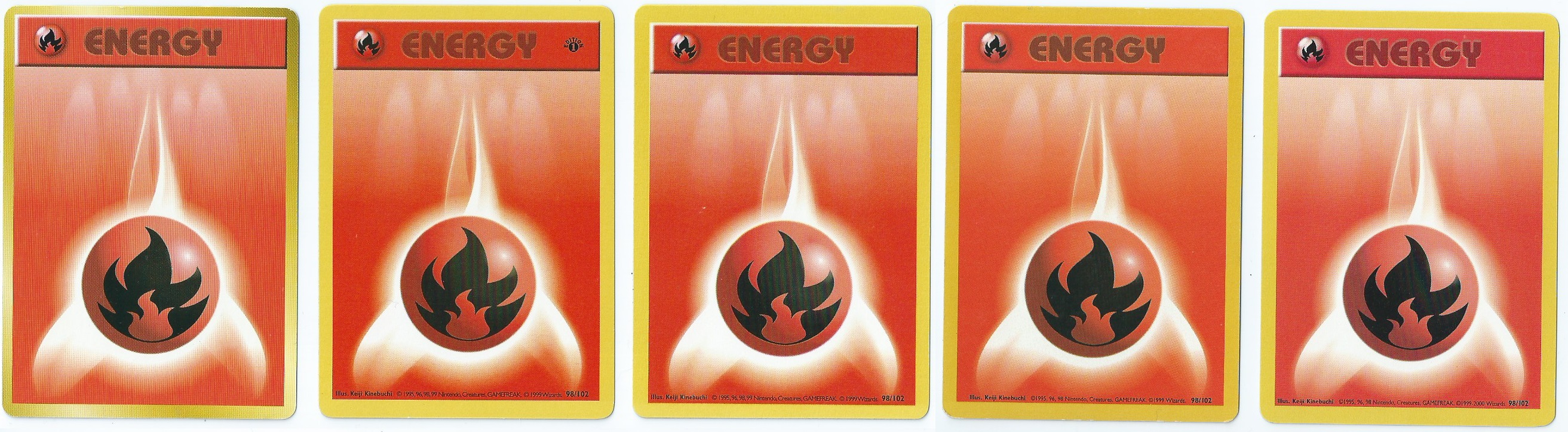
This difference explains why the Japanese and English markets have nothing in common in terms of pricing. A Japanese Base Set Charizard in PSA 10, even though it is the "original" version, trades well below an English 1st Edition Shadowless Charizard in PSA 10 — because it lacks the scarcity of the print-run variant. For a deeper dive into this topic, check out our article on the price history of the 1st Edition Charizard.
🌍 From Tokyo to the world: how the cards conquered the globe
Between October 1996 (Japan) and January 1999 (United States), more than two years passed. During that time, the Pokemon TCG became a phenomenon in Japan, with the release of Jungle, Fossil, and Team Rocket following in quick succession. When Wizards of the Coast secured the license for the West, the company knew it had a blockbuster on its hands.
The English Base Set launched on January 9, 1999 in the United States. The first print run — the famous "1st Edition Shadowless" — was limited, which explains their rarity and astronomical value today. To understand the nuances between these variants, see our article on the differences between 1st Edition and Unlimited. The French version followed later that year, with considerably smaller print runs.
In 2003, the license was transferred from Wizards of the Coast to The Pokemon Company International, which has managed the TCG ever since. But the Wizards-era cards (1999-2003) — often called the "WOTC block" or the "Wizard block" — remain the most coveted among vintage collectors. For more details, see our complete Wizard block guide.
📊 Summary: 3 types of cards, 3 different worlds
| Bandai Carddass | Topsun | Base Set (TCG) | |
|---|---|---|---|
| Date | Sept. 1996 | March 1997 | Oct. 1996 |
| Publisher | Bandai | Top-Seika | Media Factory |
| Type | Collectible | Candy bonus | Card game |
| Distribution | Vending machines | Gum packs | Boosters / Starters |
| Card count | 309 (Part 1+2) | 150 (no Mew) | 102 |
| Illustrator | Ken Sugimori | Uncredited | Arita, Sugimori, etc. |
| Holos | 24 Prism | 16 Prism | 16 Holos |
| Playable? | No | No | Yes |
These three types of cards coexisted in Japan within the same few months. For a Japanese child in 1996-1997, Carddass and Topsun cards were everyday objects — as commonplace as Panini stickers in America or Europe. Nobody imagined they would become collectible pieces worth thousands of dollars — just as nobody imagined that a Japanese promo card like the Pikachu Illustrator would one day sell for $16 million.