Did you pull a holographic Charizard from an old binder? Or maybe you just opened a spectacular Illustration Rare from a recent booster? Either way, the same question arises: should you get that card graded, and how do you go about it from Europe?
Grading has become a near-essential step for any serious collector. A card certified PSA 10 can be worth 5 to 50 times more than the same card ungraded. But between the dozens of grading companies available, pricing that varies fivefold, customs questions and sometimes endless turnaround times, the process can seem intimidating.
This guide is here to clarify everything. In 10 detailed sections, we will cover absolutely everything a European collector needs to know to get their Pokemon cards graded intelligently and profitably.

Why get your Pokemon cards graded?
Grading is not just about prestige. It is a concrete action that transforms a simple card into a standardized, authenticated and protected collectible. Here are the four main reasons collectors get their cards graded.
A spectacular value multiplier
The impact of grading on a card's value is often spectacular. Here are some concrete examples with French Base Set cards:
Grading impact on value: real examples



A holographic Charizard from the French Base Set, ungraded and in good condition, trades for around 200 to 400 euros. The same card in PSA 10 Gem Mint easily exceeds 5,000 euros -- and the French edition is even rarer than the English one. For 1st Edition versions, the differences are even more staggering: a 1st Edition Charizard PSA 10 has reached heights above $400,000. To track these trends, check out our detailed Charizard price analysis.
Authentication against counterfeits
The Pokemon card market is unfortunately flooded with increasingly sophisticated counterfeits. A professional grading lab examines each card under specialized lighting, with high-precision magnification, and detects fakes, reseals and retouched cards. Encapsulation in a sealed case certifies that the card is authentic -- a decisive argument for potential buyers. To learn how to spot fakes yourself, check out our guide to recognizing authentic Pokemon cards.
Permanent physical protection
The grading case (called a "slab") is a rigid plastic enclosure, sealed by ultrasonic welding or a mechanical system, that protects the card against handling, moisture, dust and UV light. It is the best protection available for a valuable card. Combined with good Pokemon card storage practices, the slab ensures your card will maintain its condition for decades.
Increased liquidity on the international market
A PSA or CGC graded card sells faster and at a better price than an ungraded card, anywhere in the world. The grade provides a universal standard that any buyer can verify online through the unique certification number. No more haggling over card condition: the grade speaks for itself.
The major grading companies: a comparison
In 2026, a European collector can choose between international companies (PSA, CGC, Beckett) and European or French companies (PCA Grade, CCC Grading, SFG Grading). Each has its strengths and weaknesses. For an in-depth comparison of the three giants, see our article PSA vs CGC vs Beckett: prices, turnaround and value in 2026.
International companies
PSA
The world leader. Over 70% market share for Pokemon cards. Best resale value, most complete Population database. US-based company, customs fees apply when shipping from Europe. New European facility in Frankfurt (summer 2026).
CGC Cards
The serious challenger. Detailed subgrades (centering, corners, edges, surface), very robust cases, more accessible pricing. US-based company in Sarasota. European branch in Munich. Resale value steadily climbing.
Beckett (BGS)
The prestigious one. The BGS 10 Black Label is the rarest and most valued grade in the industry. Subgrades included. Acquired by Collectors (PSA's parent company) in late 2025. More limited market for Pokemon.
European companies
PCA Grade
The European leader. Founded in 2015 in Paris, the first specialized card grading service in Europe. Scale of 10, polished labels, subgrades available. No customs for EU clients. 2 to 4 week standard turnaround. From €19.90/card.
CCC Grading
The fast French option. French company offering pre-grading and full grading. Turnaround from 3 to 25 days. From €15/card. Detailed report included. Crossover service available (re-grading of already encapsulated cards).
SFG Grading
The newcomer. Societe Francaise de Gradation. Ultrasonic-sealed cases, authentication and scoring service. Competitive pricing. A growing local alternative for European collectors.
Detailed comparison table
| Criterion | PSA | CGC | BGS | PCA | CCC |
|---|---|---|---|---|---|
| Country | USA | USA | USA | France | France |
| Base price | $24.99 (Value Bulk) | $15 (Bulk) | $14.95 (Base) | €19.90 | €15 |
| Standard turnaround | 75-95 days | 50-80 days | 45+ days | 2-4 weeks | 10-25 days |
| Subgrades | No (standard) | Yes (4 criteria) | Yes (4 criteria) | Yes | Yes |
| Resale value | Highest | 70-85% of PSA | Variable (BL10 > PSA10) | EU market | FR market |
| Customs from EU | Yes (if shipping direct) | Yes (if shipping direct) | Yes (if shipping direct) | No | No |
| Top grade | PSA 10 Gem Mint | CGC 10 Perfect | BGS 10 Black Label | PCA 10 | CCC 10 |

How to prepare your cards for grading
Preparing your cards before shipping is a crucial step. Poor handling can create micro-scratches or marks that will lower the grade. Here is the necessary equipment and best practices.
Essential equipment
The 6 preparation steps
- Wash your hands or put on nitrile gloves. Fingerprints are the number one enemy of holographic surfaces.
- Inspect the card under angled lighting. Tilt the card under an LED lamp to reveal micro-scratches, print lines and surface defects invisible under direct light.
- Check the centering with a measuring tool (mobile apps like "PSA Centering Tool" or a transparent ruler). PSA allows 60/40 centering on the front and 75/25 on the back for a grade 10.
- Examine the corners and edges with a loupe (x10 magnification minimum). Look for whitening (cardboard showing through on corners), nicks and scuffs.
- Slide the card into a new penny sleeve, holding it by the edges only. Always use brand-new sleeves -- even the slightest dust in a used sleeve can create micro-scratches.
- Place the sleeve into a semi-rigid holder (Card Saver I for PSA, Card Saver II or toploader for other services). Note: PSA does not accept toploaders or opaque sleeves. Always check each service's specific submission requirements.
The submission process step by step
Whether you are sending your cards directly or going through an intermediary, here is the typical submission journey with PSA, the most popular grading service. The process is similar for CGC and Beckett.
Group submissions from Europe
Group submission is by far the most popular and cost-effective method for getting your cards graded at PSA or CGC from Europe. The principle is simple: an authorized European intermediary collects cards from dozens of clients and sends them in a single package to the lab, pooling the shipping costs.
How does it work?
- You choose an intermediary: GCC (Graded Card Center), Playground Arena, Concept Grading, Japan Collector or other services based in France or elsewhere in Europe.
- You send your prepared cards to the intermediary within Europe (domestic shipping, no customs).
- The intermediary groups cards from all clients and sends them in one bulk shipment to the overseas lab.
- They handle customs paperwork, insurance and package tracking.
- Graded cards are returned to you directly or via the intermediary, typically within 3 to 6 months for PSA.
Benefits of group submission
Intermediaries typically charge a surcharge of 5 to 15 euros per card on top of the lab's grading fees. This may seem expensive, but it is often cheaper than handling international shipping, insurance, customs forms and returns yourself. These professionals know the procedures inside and out and help you avoid the costly mistakes that come with first-time submissions.
Detailed grading costs in 2026
Grading cost is one of the most frequently asked questions. Here is a comprehensive summary of pricing in effect as of March 2026, following PSA's price increase (February 2026) and CGC's increase (January 2026).
PSA pricing (February 2026)
PSA raised its prices on February 10, 2026, with a $5 increase on the most accessible service tiers:
| Service level | Price per card | Stated turnaround | Conditions |
|---|---|---|---|
| Value Bulk | $24.99 | 95 days | Minimum 20 cards, Collectors Club |
| Value | $32.99 | 75 days | Max declared value $499 |
| Value Plus | $49.99 | 45 days | Max declared value $999 |
| Value Max | $64.99 | 35 days | Max declared value $2,499 |
| Regular | $79.99 | 25 days | Max declared value $4,999 |
| Express | $149 | 10 days | Max declared value $9,999 |
| Super Express | $299 | 5 days | No value limit |
| Walk-Through | $599 | 1-2 days | No value limit |
CGC Cards pricing (January 2026)
CGC also raised its prices as of January 6, 2026:
| Service level | Price per card | Conditions |
|---|---|---|
| Bulk | $15 | Max declared value $250 |
| Economy | $18 | Max declared value $500 |
| Standard | $55 | Max declared value $1,000 |
| Express | $100 | Max declared value $5,000 |
| Walk-Through | $300 | No value limit |
Beckett (BGS) pricing
| Service level | Price per card | Stated turnaround |
|---|---|---|
| Base | $14.95 | 45+ days |
| Standard | $34.95 | 20+ days |
| Express | $79.95 | 10 days |
| Priority | $124.95 | 5 days |
European service pricing
PCA Grade offers rates starting at 19.90 euros per card, with express options available. Prices increase based on the card's declared value. The major advantage: no customs fees since everything stays within the EU.
CCC Grading starts at 15 euros per card for cards with an estimated value between 1 and 50 euros, with tiered pricing and pre-grading options. Economy turnaround is 25 days, and super-express goes down to just 3 days.
Shipping and customs: what you need to know
Customs is one of the trickiest aspects of international grading from Europe. In April 2025, PSA even temporarily suspended international submissions due to tensions around US tariff policies. Here is what you need to know.
Shipping to the United States
- Recommended carrier: DHL Express or UPS for reliability and detailed tracking. National postal services are possible but slower and with less tracking visibility.
- Insurance: Insure your package for the actual value of the cards. Carriers offer insurance up to several thousand euros.
- Customs declaration: Declare the cards as "trading card game - for professional grading service - temporary export." Some intermediaries use the temporary admission regime (ATA Carnet) to avoid import/export taxes.
- Discretion: Never write "Pokemon cards" or any indication of value on the outside of the package. Use plain, unbranded packaging.
Return from the United States
- Customs duties: Cards returning to Europe may be subject to VAT (20% in France, varies by country) and potentially customs duties. The declared customs value is based on the graded card values, which can be substantially higher than the outbound declared value.
- PSA offers free return shipping for submissions where grading fees exceed $350. Below that threshold, standard international return shipping fees apply.
- The intermediary solution: This is precisely why group submission services are so popular in Europe. Professionals handle the customs paperwork and pool the costs.
The good news: PSA in Frankfurt in 2026
PSA has announced the opening of its first full-scale grading facility in Europe, located in Frankfurt, Germany, planned for summer 2026. This facility will allow European collectors to submit their cards without transatlantic shipping and without customs fees (free circulation within the EU). Turnaround times should be considerably reduced. This is a game-changer for the European grading market.
Realistic turnaround times: what to expect
The turnaround times stated by labs are processing times, not total turnaround times. You need to add round-trip shipping time. Here is a realistic timeline for each option from Europe.
Actual total turnaround (preparation + shipping + grading + return)
For PSA via an intermediary, the typical process breaks down as follows: you send your cards to the intermediary (3-5 days), the intermediary waits until they have enough cards for a group shipment (1-4 weeks), the shipment crosses the Atlantic (1-2 weeks), PSA processes the order (25 to 95 days depending on service), and the return takes another 2-4 weeks. Add it all up and you understand why patience is an essential virtue for collectors who want to get their cards graded.
European services like PCA Grade and CCC Grading offer a considerable advantage in terms of turnaround: no international transit, no customs, no grouping wait. You send your cards via domestic mail in 1-2 days and receive your graded cards in 1 to 4 weeks depending on the service chosen.
Is it worth it? Calculating grading ROI
The big question: does grading pay off financially? The answer depends on three factors: the raw value of the card, the expected grade, and the total cost of grading. Here is a concrete calculation method.
The 50-euro rule
As a general rule, it is worth grading a card at PSA if its raw value (ungraded, in good condition) exceeds 50 euros. Below this threshold, the cost of grading (35 to 100 euros via an intermediary) risks exceeding the added value generated, even with an excellent grade. For European services like PCA or CCC, the threshold drops to around 20 to 30 euros.
Concrete ROI examples
Profitable
Mewtwo holo Base Set FR
Raw value: ~€80
PSA Value grading via intermediary: ~€50
If PSA 9: value ~€250. If PSA 10: value ~€600.
ROI at PSA 9: +150%
ROI at PSA 10: +360%
Borderline
Jungle rare holo FR
Raw value: ~€30
PSA grading cost: ~€50
If PSA 9: value ~€70. If PSA 10: value ~€150.
ROI at PSA 9: -12%
ROI at PSA 10: +88%
Risk if grade < 10.
Not profitable
Modern non-holo common
Raw value: ~€2
Grading cost: ~€50
Even at PSA 10: value ~€10-15.
Net loss of €35-40
Never grade a low-value card at PSA.
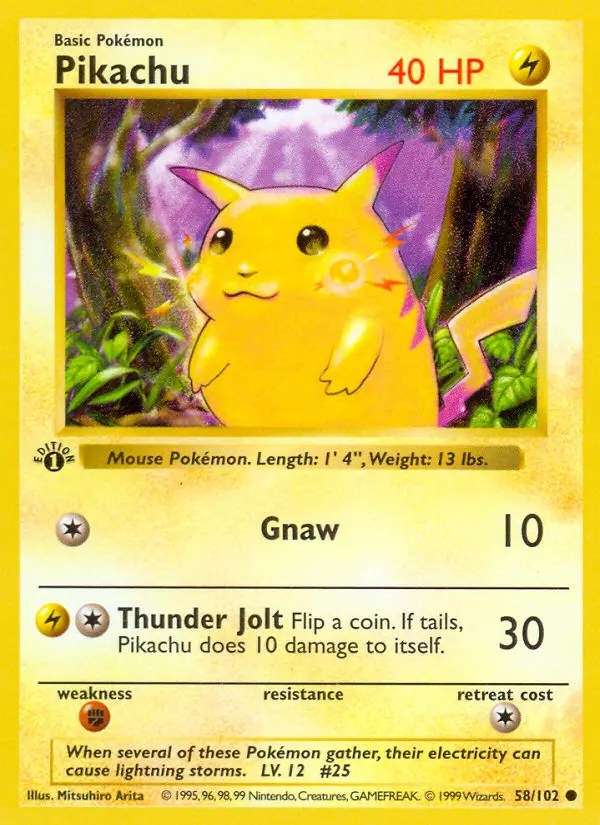
The European alternative for mid-value cards
For cards with a raw value between 20 and 50 euros, European services become attractive. At a cost of 15 to 20 euros per card at CCC Grading or PCA Grade, the profitability threshold drops significantly. A 30-euro raw holo that scores PCA 10 can sell for 60-80 euros on the European market, yielding a positive return even after fees.
Keep in mind, however, that the resale premium from European services is lower than PSA on the international market. A PCA 10 will generally sell for less than an equivalent PSA 10, especially to non-European buyers. For high-value cards destined for the global market, PSA remains the optimal choice. To understand the differences between 1st Edition and Unlimited cards, check out our dedicated guide.
Our tips for a successful first submission
Ready to take the plunge? Here are our final recommendations to make your first grading experience a success.
- Start small. A first batch of 5 to 10 cards is ideal for getting familiar with the process without taking too much risk. Choose cards whose condition you know well.
- Do a pre-grade assessment. Before sending, evaluate each card's condition as rigorously as possible. Compare with photos of graded cards available on eBay or the PSA Set Registry. Some intermediaries offer a professional pre-grading service.
- Use an intermediary for your first submission. Form errors, packaging mistakes and customs issues are common the first time and can be costly. A professional will help you avoid these pitfalls.
- Calculate ROI before submitting. For each card, estimate the expected graded value (at PSA 8, 9 and 10) by checking recent sales on eBay. Subtract the total grading cost. If the result is negative even at PSA 10, do not submit that card.
- Diversify your services. Send your best cards to PSA for resale value, and use PCA or CCC for mid-value cards destined for your personal collection.
- Be patient. PSA grading takes time, especially for economy services. Do not check your order status every day -- you will receive automatic notifications at each stage.
- Document everything. Photograph each card before shipping, keep tracking numbers, invoices and customs receipts. In case of a dispute, this evidence will be essential.