1. Introduction: the Pokemon TCG market in numbers (2026)
In March 2026, the Pokemon Trading Card Game (TCG) market is a $2.7 billion annual ecosystem. A figure that would have seemed absurd a decade ago, when Pokemon cards were still largely perceived as childhood toys gathering dust in closets.
But between 2020 and 2026, the market underwent a radical transformation. A speculative bubble fueled by celebrities and social media. A crash that halved some prices. A gradual stabilization. And, since February 2026, a 30th anniversary that is breathing fresh energy into the entire ecosystem.
This article traces the six most intense years in Pokemon TCG market history. No sensationalism, no return promises: facts, data and structured analysis to understand where we are — and where the market might be headed.
2. 2020-2021: the speculative bubble
It all began in October 2020, when YouTuber Logan Paul opened a sealed 1st Edition Base Set booster box live, in front of millions of viewers. The video racked up over 15 million views within weeks. The Pokemon card market, until then a niche community affair, exploded under the spotlight.
The three catalysts of the bubble
- The Logan Paul effect: Between October 2020 and February 2021, Logan Paul spent over $3.5 million on Pokemon cards, including $150,000 for a single sealed booster box. Every purchase was filmed, shared and discussed by millions. Other YouTubers followed: Leonhart, PokeRev, Randolph. "Pokemon unboxing" became a genre in its own right on YouTube.
- The COVID effect: Successive lockdowns pushed millions of people to revisit childhood hobbies. Google searches for "Pokemon cards" surged 400% between March 2020 and February 2021. With more free time and stimulus checks in the US, money poured into collectibles.
- The TikTok effect: TikTok's algorithm propelled booster opening videos into the feeds of millions who had never thought about Pokemon cards. The #PokemonTCG hashtag surpassed 4 billion views in 2021. Every spectacular "pull" video generated hundreds of thousands of views, creating a vicious cycle of media attention and speculation.
The numbers behind the mania
Vintage Pokemon card price index (base 100 in January 2020)
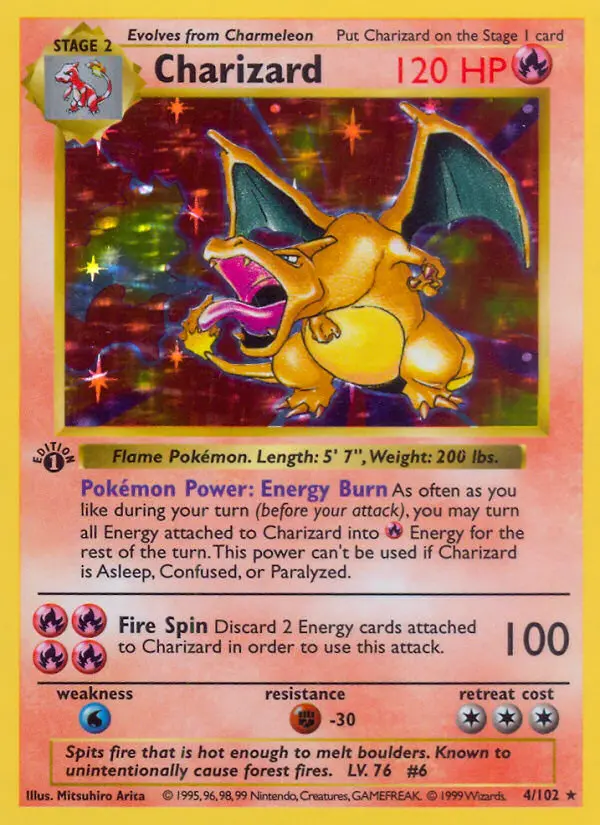
Between January 2020 and February 2021, the vintage Pokemon card price index was multiplied by 3.5x. A 1st Edition Base Set Charizard PSA 9, which sold for around $15,000 in early 2020, hit $55,000 by February 2021. Sealed Base Set booster boxes went from $10,000 to over $400,000. Neo extensions, Gold Star cards, Japanese promos: virtually every vintage segment was swept up by the wave.
But the bubble was not limited to vintage. Modern sets like Vivid Voltage and Shining Fates were impossible to find at retail. Scalpers bought entire pallets at Walmart and Target to resell at inflated prices on eBay. Target eventually suspended in-store Pokemon card sales temporarily for safety reasons, following incidents in their parking lots.
3. 2022-2023: correction and crash
Like every bubble, this one eventually burst. The correction began as early as mid-2021, but it became undeniable in 2022. The causes were multiple and mutually reinforcing.
Why the market corrected
- End of easy money: The Fed and ECB interest rate hikes drained liquidity from "alternative" assets. Crypto, NFTs and collectibles all took the same hit.
- Overproduction by The Pokemon Company: Facing 2021 demand, TPC massively increased print runs. Sets like Brilliant Stars and Pokemon GO were printed in enormous quantities. The modern market was flooded with product, driving modern card prices down 40-60%.
- Speculators leaving: The "flippers" who had invaded the market in 2021, attracted by quick gains, left as fast as they arrived. Without speculative buyers, resale prices normalized.
- PWCC scandal: In 2022, auction platform PWCC was accused of "shill bidding" by eBay, which terminated their partnership. This affair shook market confidence and slowed transactions.
What collapsed
Base Set Booster Box (sealed)
$400,000 (2021)
$180,000
-55%Charizard 1st Ed. PSA 8
$12,000 (2021)
$5,500
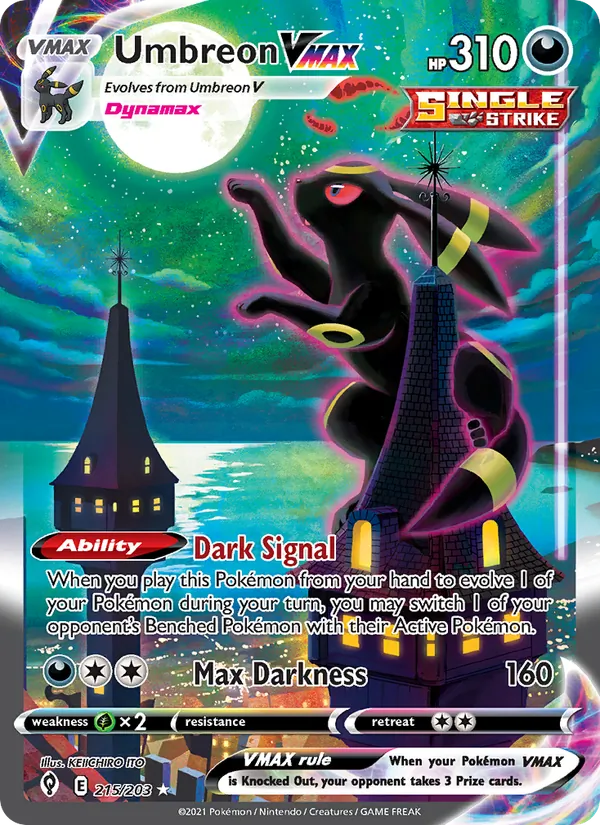
-54%Umbreon VMAX Alt Art
$500 (2021)
$200
-60%Shining Fates ETB (sealed)
$120 (2021)
$45
-62%What held up
Not all cards fell equally. And therein lies the most important lesson from this correction: true quality and scarcity withstand market downturns.
Charizard 1st Ed. PSA 10
$420,000 (2022)
$550,000
+31%Pikachu Illustrator
$5.3M (2021)
$16.5M
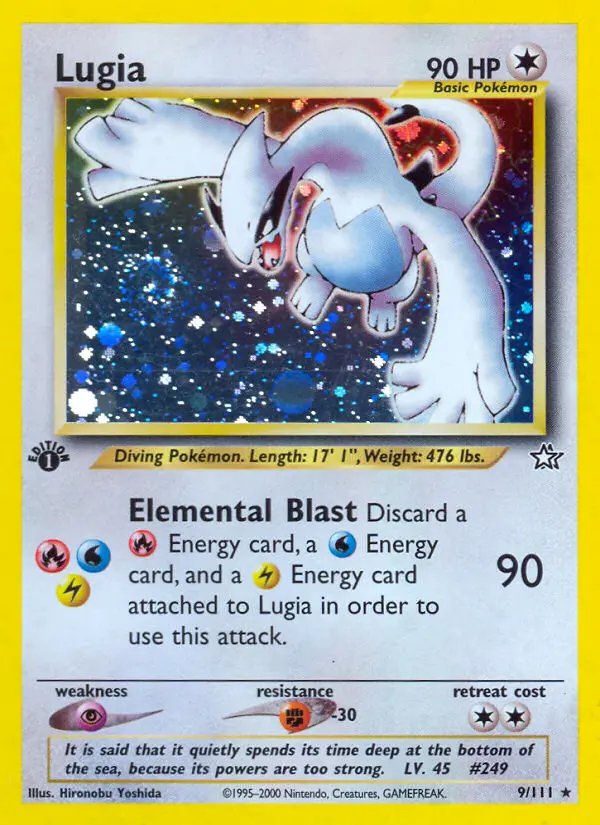
+212%Lugia Neo Genesis PSA 10
$22,800 (2023)
$45,000
+97%Japanese Trophies PSA 9+
$250,000 (2022)
$450,000
+80%4. 2024-2025: stabilization and market maturity
The 2024-2025 period marks a turning point. The Pokemon TCG market exits its correction phase and enters an era of maturity. Speculators have left, collectors have stayed, and new structures are emerging to professionalize the ecosystem.
Signs of maturity
- Structured auctions: Goldin Auctions and Heritage Auctions developed dedicated Pokemon departments. Heritage achieved $5.27 million in a single Pokemon sale in December 2025, a house record. Sales are now scheduled, predictable and transparent.
- Reliable price indices: Platforms like PriceCharting, PSA Auction Prices and TCGPlayer provide accurate historical data. Collectors no longer fly blind: they have charts, averages and transaction volumes at their fingertips.
- Professionalization of the market: Investment funds specializing in collectibles (Alt Funds, Rally, Mythic Markets) now include Pokemon cards in their portfolios. The Pokemon card has gone from curiosity to recognized alternative asset.
- Japanese market revival: Japan, the TCG's home market, experienced a domestic demand explosion. Japanese cards in high grade now command prices exceeding their English equivalents for certain references — a historic first.
Market maturity indicators (2025)
After months of submission backlogs, PSA democratizes grading with an affordable price point. Submission volumes increase, signaling a market getting back in motion.
The figure covers the entire TCG history. In 2024 alone, nearly 10.2 billion cards were printed, confirming the primary market (new product sales) remains healthy.
Double its late 2023 value. Neo-era vintage holo cards (1999-2002) emerge as the fastest-growing segment, driven by tiny PSA 10 populations.
Charizard 1st Ed. PSA 10 at $550,000, Trophy No. 1 Trainer at $450,000. Both records confirm that the top of the vintage market has surpassed its 2021 levels. Market maturity translates into stable prices and institutional demand.
5. 2026: the state of the market today
February 2026 marks the 30th anniversary of Pokemon. The franchise, created by Satoshi Tajiri and launched on February 27, 1996 with the Pocket Monsters Red and Green games in Japan, celebrates three decades of existence. And the card market is at the heart of this celebration.
The 30th anniversary impact
- Commemorative sets: The Pokemon Company released special 30th anniversary sets, including holographic reprints of the most iconic cards (Charizard, Blastoise, Venusaur from the Base Set) with a gold anniversary stamp. These sets generated massive commercial excitement.
- Media coverage: CNN, BBC, The New York Times, NHK: media worldwide covered the anniversary, putting Pokemon back at the center of cultural attention. Every article mentions the $16.5 million Pikachu Illustrator record, drawing new collectors.
- New entrants: The anniversary attracted a new wave of collectors, particularly 30- and 40-somethings nostalgic for their Pokemon childhood. These buyers have significant purchasing power and primarily target the vintage segment.
The Pikachu Illustrator record: an inflection point
On February 16, 2026, the sale of the Pikachu Illustrator PSA 10 for $16.49 million at Goldin Auctions was a watershed moment for the market. It is not just a price record: it is a signal to financial markets and media that Pokemon cards now play in the same league as contemporary art and classic cars.
The cascade effect is measurable: in the two weeks following the sale, Pokemon card submissions to PSA increased by 22%, and active Goldin auctions rose by 35%. The record put the market back in the spotlight at exactly the right moment — the 30th anniversary — creating an ideal conjunction.
The Pokemon market in March 2026
6. Vintage vs Modern: two different markets
One of the most common mistakes new collectors make is treating the Pokemon market as a monolithic block. In reality, there are two distinct markets, with radically different dynamics, price points and buyer profiles.
| Criteria | Vintage Market (1996-2003) | Modern Market (2020+) |
|---|---|---|
| Period covered | Base Set through Skyridge (WotC + e-Series) | Sword & Shield, Scarlet & Violet, 30th anniv. |
| Price range (PSA 10) | $500 — $550,000 (iconic holos) | $20 — $5,000 (alt art, special art rare) |
| Primary value driver | Natural scarcity (limited print runs, survival) | Illustration & desirability (alt art, full art) |
| PSA 10 population | Tens to hundreds (fixed, grows very slowly) | Hundreds to thousands (grows with new submissions) |
| Volatility | Moderate (30-50% corrections during crashes) | High (40-70% swings possible) |
| Liquidity | Low to moderate (weeks to months to sell) | High (days to weeks) |
| Buyer profile | Serious collectors, investors, funds | Players, casual collectors, flippers |
| Overproduction risk | None (cards are no longer printed) | High (TPC adjusts print runs to demand) |
| Trend sensitivity | Low (structural demand) | High (hype cycles, rapid rotation) |
Vintage: the vault
Guaranteed scarcity, high prices, slow but steady growth. Ideal for patient collectors and long-term investors.
Modern: the playground
Accessible, liquid, fast-moving. More volatile but more dynamic. Ideal for players and budget-conscious collectors.
To dive deeper into the vintage segment, check out our complete WotC era guide. For modern, our article on which Pokemon booster to buy in 2026 offers a detailed analysis.
7. The factors that drive prices
Understanding price formation mechanisms is essential for navigating the Pokemon TCG market. Here are the five key factors, in order of importance.
1. PSA population
The number of copies graded in a given condition by PSA (or CGC/Beckett) is the single most important factor for valuable cards. The logic is straightforward: fewer PSA 10 copies of a card means each copy is more precious.
Concrete example: the 1st Edition Base Set Charizard. Out of over 2,300 copies submitted to PSA since 1999, only 121 received a PSA 10 grade. That 5.3% ratio explains the staggering price gap between a PSA 9 ($50,000) and a PSA 10 ($550,000). Each new PSA 10 added to the population technically reduces scarcity, but in practice, the rate of new vintage submissions is so low that the impact is negligible.
For a deeper dive, see our detailed PSA vs CGC comparison.
2. Generational nostalgia
Millennials (born 1981-1996) grew up with Pokemon. They are now between 30 and 45 years old — the age range with the highest purchasing power. This phenomenon of "monetized nostalgia" is the underlying engine of the vintage market.
But nostalgia is a cyclical factor. Generation Z, who grew up with XY and Sun & Moon sets, is starting to enter the workforce. Within 5-10 years, cards from those eras could experience the same renaissance that Base Set cards enjoyed in the 2020s. Smart collectors are already positioning themselves.
3. Celebrity and media influence
Logan Paul, MrBeast, Randolph, Leonhart: digital celebrities have a measurable impact on Pokemon card prices. Every booster opening video or spectacular purchase drives new buyers into the market and pushes prices up in a cascade.
But this is a double-edged sword. When celebrities lose interest (as in 2022-2023), speculative demand evaporates and prices correct. The February 2026 Pikachu Illustrator sale by Logan Paul showed that media influence remains powerful, but now the market is structured enough to absorb shocks.
4. Physical supply and demand
Vintage cards are no longer printed. Every card destroyed, lost or damaged permanently reduces available supply. Meanwhile, demand is structurally bullish thanks to the growing global collector community. This widening imbalance between shrinking supply and growing demand is the most powerful driver of long-term vintage price appreciation.
To understand the importance of Pokemon card preservation, consider that every poorly stored card is permanently "removed" from the high-grade market.
5. Anniversary events and new releases
The 25th anniversary (2021) and the 30th anniversary (2026) both generated massive demand spikes. These events bring Pokemon back into the news, attract mainstream media and create an "entry event" for new collectors. The impact of the 30th anniversary is particularly strong as it arrives in a market already in recovery mode.
8. 2026-2028 forecast: three scenarios
Predicting a collectibles market is a perilous exercise. But by cross-referencing historical data, structural trends and the macroeconomic context, three scenarios emerge for the next two years.
Bullish scenario
Vintage PSA 10: +15 to 25%/year
The 30th anniversary generates a lasting influx of collectors. Specialized investment funds increase allocations. Natural scarcity of vintage cards accelerates. The Japanese market keeps surging. Auction records multiply.
Estimated probability: 30%
Neutral scenario
Vintage PSA 10: +5 to 10%/year
The market continues maturing at a steady pace. Vintage prices grow with inflation and organic demand. Modern market remains volatile. No major external shock.
Estimated probability: 50%
Bearish scenario
Vintage PSA 10: -10 to -20%
A global recession reduces discretionary spending. A counterfeiting or grading scandal shakes confidence. TPC overproduction dilutes TCG interest overall. Celebrities move on to new trends.
Estimated probability: 20%
Segments to watch
- Japanese vintage cards: The domestic Japanese market is booming. Cards from original Japanese sets (VS Series, Web Series, Japanese e-Series) are still undervalued relative to English equivalents. A catch-up is likely.
- Neo-era sets (Neo Genesis to Neo Destiny): Holo and "Shining" cards from the Neo era are experiencing rapid revaluation. The Lugia Neo Genesis PSA 10 doubled in a year, and other cards are following the same trajectory.
- Modern alt arts: In the modern segment, alternative illustrations ("alt art") from the Sword & Shield series remain the most desirable. The Umbreon VMAX Alt Art, known as the "Moonbreon," is the most iconic modern card.
- Heritage and Goldin Auctions: Both US-based auction houses are setting new records quarterly. Heritage's dedicated TCG department and Goldin's digital-first approach have made the US the global epicenter for high-value Pokemon sales.
9. Tips for navigating the current market
Whether you are a beginning collector or an investor looking to diversify, here are our recommendations for approaching the Pokemon TCG market in 2026.
For collectors
- Educate yourself before buying: Read, compare, follow auctions without bidding. Our beginner's guide to Pokemon collecting is a good starting point.
- Prioritize quality: One PSA 9 of an iconic card is a better long-term investment than ten PSA 7s. The value gap only widens over time.
- Diversify across eras: Do not put everything into the Base Set. Neo sets, e-Series and Japanese promos offer excellent value with significant upside potential.
- Buy what you love: The market can correct at any time. If you are happy to keep your cards even if their value drops, you will never be forced to sell at the worst moment.
- Verify authenticity: Counterfeits are increasingly sophisticated. Learn to spot a fake Pokemon card and only buy high-value cards in graded form from PSA, CGC or Beckett.
For investors
- Target iconic PSA 10s: Charizard 1st Ed., Blastoise, Venusaur, Lugia Neo Genesis, Trophy Cards. These showed the best resilience during the 2022-2023 correction.
- Monitor PSA populations: Before buying, check the PSA 10 population at psacard.com/pop. Under 100 PSA 10s for an iconic card is a very positive signal.
- Only invest what you can afford to lose: Pokemon cards are not a liquid asset. Investment horizons are 3-10 years minimum. Do not put into cards what you might need quickly.
- Avoid hype: Modern "hyped" cards often lose 40-60% of their value within 6 months. Vintage is more predictable and more resilient.
- Document everything: Keep invoices, grading certificates, proof of purchase. Provenance increases resale value and facilitates future transactions.
Conclusion: a market between heritage and innovation
In six years, the Pokemon TCG market has undergone an unprecedented acceleration. From a niche hobby for nostalgics, it has become a world-class collectibles ecosystem with dedicated auction houses, price indices and eight-figure records.
The 2021 bubble was painful for those who bought at the top, but it also had an unexpected positive effect: it put Pokemon on the map for serious collectors and institutional investors. The 2022-2023 correction cleansed the market by eliminating the weakest speculators.
Today, in March 2026, the market is in remarkably good health. The 30th anniversary, the Pikachu Illustrator record, the structuring of auctions and the natural scarcity of vintage cards form an alignment of positive factors rarely seen.
The future of the Pokemon TCG market rests on a balance between heritage (vintage cards, irreplaceable and increasingly rare) and innovation (new illustrations, gameplay formats, gamification). Those who understand this duality and invest accordingly — with passion, patience and method — are best positioned for the decade ahead.
To deepen your market knowledge, explore our detailed guides: the 15 most expensive Pokemon cards in the world, investing in Pokemon cards in 2026, and Charizard price evolution.