Introduction: promos, the cards everyone underestimates
When people talk about valuable Pokemon cards, the conversation always gravitates toward the same names: Base Set Charizard, 1st Edition holos, Secret Rares from the latest expansions. Yet there is an entire market segment that most collectors overlook or underestimate: Pokemon promo cards. These cards, distributed outside of standard booster packs, form a parallel universe that is every bit as vast and fascinating, where the rarest pieces command staggering prices.
A promo card, by definition, is a card you cannot pull from a regular booster pack. It is distributed through a specific channel: a theatrical movie release, an official tournament, a commercial partnership with McDonald's or a magazine, a Pokemon event like the World Championships, or a Build & Battle prerelease kit. Each distribution channel creates a unique tier of scarcity, because the number of copies produced is often far smaller than for regular set cards.
What makes promos particularly interesting for collectors and investors is their verifiable rarity. Unlike set cards where exact print runs remain a mystery, event promos have known or estimable distribution numbers: how many participants attended a World Championship, how many theaters handed out a card, how many magazines were printed. This transparency allows a more precise assessment of true rarity.
In this guide, we will explore the full landscape of the Pokemon promo card market: the different distribution types, the 10 most sought-after promos with estimated prices, how to identify and authenticate them, and most importantly, how to invest smartly in this overlooked segment. Whether you are a seasoned collector looking to round out your collection or an investor seeking opportunities, promos represent a hunting ground rich with surprises.
Types of promo cards: understanding distribution channels
Not all promo cards are created equal, and understanding the different distribution channels is essential for assessing rarity and value potential. Here are the main categories, each with its own characteristics and scarcity levels.
Movie / Anime
Distributed in theaters during Pokemon movie releases. Print run tied to box office attendance.
Tournament / League
Staff cards, prerelease, league prizes. The rarest on the market, sometimes fewer than 100 copies.
Retail / Commercial
McDonald's, cereal boxes, CoroCoro magazines. Mass print runs but rare in preserved condition.
Events
Worlds, Regionals, Pokemon Center. Limited to attendees, high sentimental and collector value.
Build & Battle
Prerelease kits for new expansions. Exclusive holo promos, only available at local game stores.
Movie and anime promos
Movie promos are among the most iconic in the franchise. Since the first Pokemon movie in 1998 in Japan (1999 in the US), the tradition of distributing exclusive cards to moviegoers has been firmly established. The most famous is undoubtedly Ancient Mew, handed out during the theatrical run of "Pokemon the Movie 2000." This card, with its hieroglyphic text and unique design unlike any other card in the TCG, has become a legendary collectible.
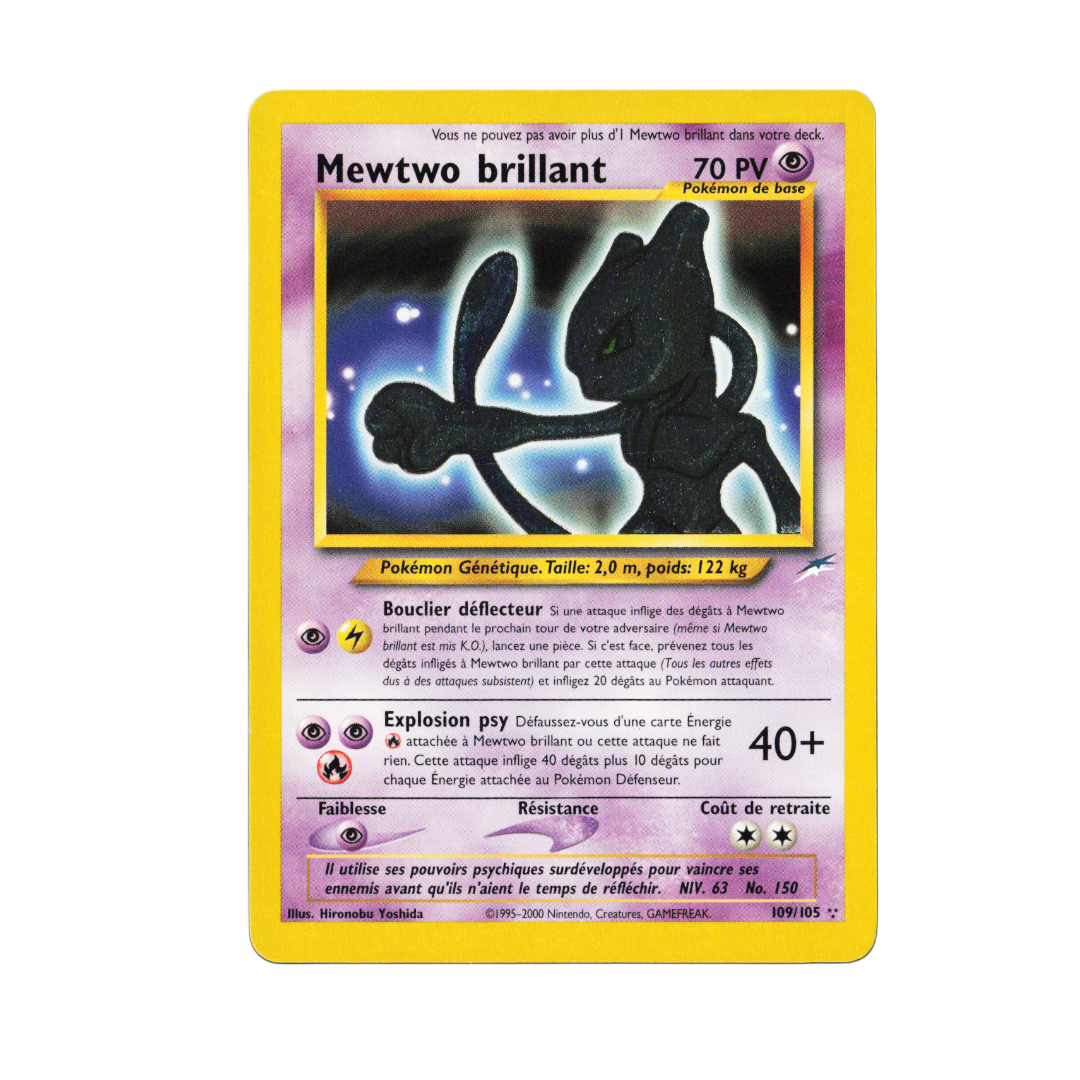
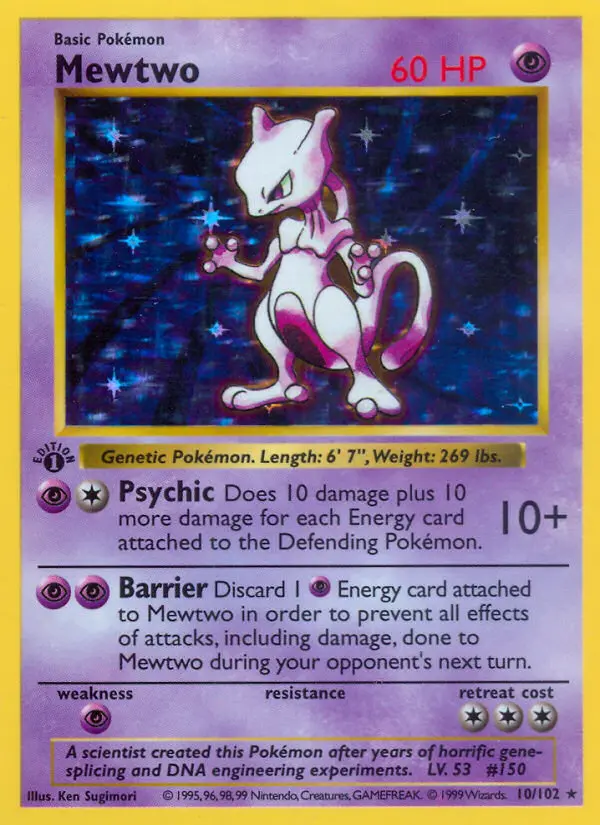
In the US, movie promos were distributed through major theater chains like AMC and Regal. The first Pokemon movie gave out a set of four cards (Mewtwo, Pikachu, Electabuzz, Dragonite) across four weekends, creating a rush that saw some screenings sell out purely because of the cards. These promos, while produced in large quantities, are increasingly difficult to find in mint condition because most were given to children who played with them immediately.
Ancient Mew was so popular that some theaters had to limit distribution to one card per person. Today, a copy still sealed in its original plastic wrapper can sell for $50 to $150, while an error version (with "Nintedo" misspelled on the back) regularly exceeds $500.
Tournament and league promos
This is where the rarest and most expensive promo cards live. Staff cards are special versions of tournament cards, identical to those given to players but bearing an additional "STAFF" stamp. They are only given to judges, organizers, and referees at official Pokemon tournaments, meaning the number of copies in circulation is extremely limited -- sometimes fewer than 50 for a regional event.
Prerelease cards are distributed at launch events for new expansions. Each participant receives a promo card with a "PRERELEASE" stamp on the artwork. While more common than Staff cards, these promos are still sought after, especially in high grades. Prerelease cards from older expansions (Wizards of the Coast era, 1999-2003) have become scarce because most were played and damaged. For more on this era, see our Wizards block guide.
League prizes (League Promos) are distributed to players who regularly attend official Pokemon leagues. These cards typically carry a league stamp and are often reprints of popular cards with alternate artwork. In the US, leagues operated through stores like Target, GameStop, and local game shops, giving these promos a uniquely American distribution footprint. Their value varies greatly depending on the year and the Pokemon featured.
Retail and commercial promos
Retail promos are the most accessible to the general public, but that does not mean they lack collector interest. The undisputed king of this category is McDonald's promos. Since 2011, McDonald's has regularly included Pokemon cards in Happy Meals, with exclusive designs adapted for a young audience. The 2021 promotion was a worldwide phenomenon, with long lines at restaurants and sealed packs being resold for premium prices on eBay.
In the United States, retail promos have historically been distributed through major retailers. Target exclusives, GameStop promos, and Best Buy preorder bonuses have created a uniquely American promo ecosystem. These retailer-specific promos are often overlooked by international collectors, creating interesting arbitrage opportunities for US-based buyers who can acquire them at retail price.
Japanese CoroCoro Comic magazine promos are a segment unto themselves. CoroCoro distributed some of the rarest cards in TCG history, including the legendary Pikachu Illustrator (of which only 39 copies are known). To learn about this record-breaking card, read our article on the Pikachu Illustrator and its $16 million record.
Cereal box and food product promos are a niche but fascinating category. In the early 2000s, certain cereal brands included Pokemon cards in their boxes. These cards, often printed on thicker cardboard than standard cards, are sought after today for their novelty and rarity -- most were thrown away with the cereal box.
Major event promos
Cards distributed at the Pokemon World Championships (Worlds) are among the most prestigious. Each year, participants, spectators, and staff at this event receive exclusive cards available nowhere else. Worlds promos from the early years (2004-2010) have become extremely rare, as production was limited to the number of attendees. The event has been held in cities like Orlando, San Diego, Vancouver, and London, with each location's promos carrying their own collector premium.
Pokemon Center promos are distributed exclusively at official Pokemon Center stores. While Japan has the most Pokemon Centers, the US has permanent locations in New York, Seattle, and online, plus pop-up shops during events. These cards often carry a "Pokemon Center" stamp and are produced in limited quantities.
Regional Championship promos complete the picture. Each region of the world receives its own exclusive cards, creating an international secondary market where collectors trade and buy promos from regions they could not visit.
Build & Battle and prerelease kits
With every new Pokemon TCG expansion, Build & Battle kits (formerly called Prerelease Kits) are distributed at authorized game stores during prerelease weekends. Each kit contains an exclusive holographic promo card, usually a prominent Pokemon from the upcoming set, plus four booster packs. These promos are identifiable by their "PRERELEASE" stamp and by the fact that they cannot be found in regular boosters.
Interest in complete (unopened) Build & Battle kits has exploded in recent years. A sealed kit from a popular expansion can quickly appreciate, as it combines the scarcity of the promo card with the appeal of sealed product. Kits from vintage expansions (Wizards era, EX era) are particularly sought after and can reach several hundred dollars.
Top 10 most sought-after promo cards
Here is our ranking of the most sought-after Pokemon promo cards on the current market. Estimated prices are based on recent sales observed on eBay, Heritage Auctions, and major specialized platforms. Ranges account for card condition, from acceptable to perfect graded condition.
| # | Card | Estimated Price | Rarity |
|---|---|---|---|
| 1 | Pikachu Illustrator (CoroCoro, 1998) | $350,000 - $5,500,000 | Mythic |
| 2 | Tropical Mega Battle Tropical Wind (1999) | $55,000 - $550,000 | Mythic |
| 3 | Pokemon World Championships No. 1 Trainer (1999) | $90,000 - $450,000 | Mythic |
| 4 | Ishihara GX (60th Birthday, 2017) | $55,000 - $275,000 | Mythic |
| 5 | Kangaskhan Family Event Trophy (1998) | $35,000 - $165,000 | Ultra-Rare |
| 6 | Staff Charizard VMAX Champions Path (2020) | $5,500 - $33,000 | Ultra-Rare |
| 7 | Ancient Mew "Nintedo" Error (2000) | $550 - $5,500 | Rare |
| 8 | Mewtwo Holo Movie Promo #1 Japanese (1998) | $550 - $3,300 | Rare |
| 9 | Surfing Pikachu VMAX Celebrations (2021) | $220 - $1,650 | Rare |
| 10 | Pikachu Holo SVP 085 Pokemon Center Exclusive (2024) | $110 - $880 | Rare |
1. Pikachu Illustrator -- the ultimate promo
The Pikachu Illustrator is the most expensive Pokemon card in the world, and it is a promo. Distributed in 1998 through CoroCoro Comic magazine in Japan as part of an illustration contest, this card exists in only 39 known copies. A PSA 10 copy sold in 2021 for $5.275 million to Logan Paul, setting the all-time record for a trading card. Even copies in poor condition trade above $350,000.
What makes the Pikachu Illustrator so special, beyond its extreme rarity, is that it embodies the very spirit of the Pokemon community: creativity and sharing among fans. It is the only card that bears the title "Illustrator" instead of "Trainer" or "Pokemon," making it a truly unique artifact in TCG history.
2. Tropical Mega Battle -- the forgotten trophy
The Tropical Wind card from the Tropical Mega Battle is one of the rarest promos in the world. This invitation-only tournament, held in Honolulu from 1999 to 2001, gathered only about fifty players selected from around the globe. Each participant received this exclusive card, meaning only approximately 150 copies exist in total (across three years). Recent PSA 9-10 sales have exceeded $200,000.
3. No. 1 Trainer -- the champion's crown
The No. 1 Trainer card is the ultimate trophy of the Pokemon World Championships. Awarded only to the winner of each regional qualifier for Worlds, this card exists in minuscule quantities. The earliest editions (1999-2000) are the scarcest, with sometimes fewer than 10 known copies. In PSA 10, a No. 1 Trainer can exceed $450,000.
The No. 1 Trainer card was never designed to be played. Its text simply reads: "The Pokemon Card Game Official Tournament's highest honor, the No. 1 Trainer, is awarded to the winning player." It is a pure collectible trophy.
4 through 10: from Ishihara GX to Pokemon Center Pikachu
The Ishihara GX (#4), created for the 60th birthday of The Pokemon Company's president, was never sold publicly and exists in only a few dozen copies. The Kangaskhan Family Event (#5), distributed at a parent-child event in Japan in 1998, is equally rare with an extremely limited print run.
The Staff Charizard VMAX from Champions Path (#6) represents the modern Staff card segment, where rarity comes from the very limited number of tournament organizers. The Ancient Mew error (#7), with its "Nintedo" typo instead of "Nintendo," is the most accessible sought-after promo -- every collector should own one.
Positions 8 through 10 illustrate the diversity of the promo market: a vintage Japanese movie promo (#8), a modern celebration promo (#9), and a recent Pokemon Center exclusive (#10). Each represents a different distribution channel and a unique investment profile.
How to identify and authenticate a promo card
Identifying a promo card relies on several visual and technical elements that every collector should master. Unlike regular set cards, promos carry specific markers that set them apart. For a comprehensive authentication guide, see our article on how to spot a real Pokemon card.
The promo stamp
Most promo cards bear a specific stamp printed on the artwork. This stamp takes different forms depending on the era and promo type:
- Black or gold "PROMO" stamp: Found on modern promos (Sun & Moon, Sword & Shield, Scarlet & Violet eras), typically in the lower right of the artwork.
- Black star symbol: Used primarily on Wizards-era promos (1999-2003) and WOTC promos, this black star replaced the usual set symbol.
- "PRERELEASE" stamp: Found on Build & Battle kit cards, printed in yellow or gold on the artwork.
- "STAFF" stamp: The holy grail of tournament promos. This additional stamp, added alongside the prerelease stamp, identifies cards intended for organizers only.
The set number
Promo cards carry a specific set number that immediately identifies them. Here are the main prefixes:
- SWSH (Sword & Shield Promos): SWSH001 through SWSH300+, covering the Sword & Shield era.
- SVP (Scarlet & Violet Promos): SVP 001+, for the current era.
- SM (Sun & Moon Promos): SM01 through SM250+.
- XY (XY Promos): XY01 through XY211.
- No number or "Promo": Some older promos (Wizards era) have no standard set number and are identified by their "Promo" designation or black star symbol.
The set symbol
Promo cards do not have a set symbol like regular set cards. Instead, they typically feature a black star (Wizards era), a specific logo (modern era), or sometimes no symbol at all. This absence of a set symbol is often the first visual clue that a card is a promo.
Advanced authentication
For high-value promos, authentication goes beyond visual inspection. Here are the recommended steps:
- Light test: Shine a strong light behind the card. Real Pokemon cards let through a uniform reddish-orange glow. Fakes either block the light completely or let it through unevenly.
- Weight test: An authentic Pokemon card weighs between 1.6 and 1.8 grams. Counterfeits are often lighter or heavier.
- Texture check: Authentic holo cards have a specific feel. Promos with special finishes (confetti, cosmos, etc.) should present a uniform and consistent texture.
- Professional grading: For any promo card worth over $200, grading by PSA or CGC is strongly recommended. It guarantees authenticity and preserves value. See our comparison of PSA vs CGC to choose the right service.
Promos vs. set cards: value comparison and trajectory
One of the most common collector questions is: are promos worth more or less than regular set cards? The answer is nuanced and depends entirely on the promo type and distribution context.
Ancient Mew (Movie, 2000)
Limited theater distribution. Unique design, no set equivalent. Value steadily rising since 2020.
Mew Holo Fossil 8/62
Available in booster packs. Classic design. Stable value but slower growth trajectory.
Charizard VMAX Staff (2020)
Fewer than 200 estimated copies. Exclusive "STAFF" stamp. Explosive growth trajectory.
Charizard VMAX Champions Path
Pulled from boosters, available in quantity. Strong demand but larger supply.
The general trend shows that limited-distribution promos (Staff, Worlds, trophies) outperform regular set cards over the long term. Their rarity is absolute: there can be no reprints, no discovery of a forgotten warehouse stock. In contrast, mass-distributed promos (McDonald's, theaters, magazines) follow a trajectory closer to set cards, with prices that increase gradually but without the dramatic spikes of event promos.
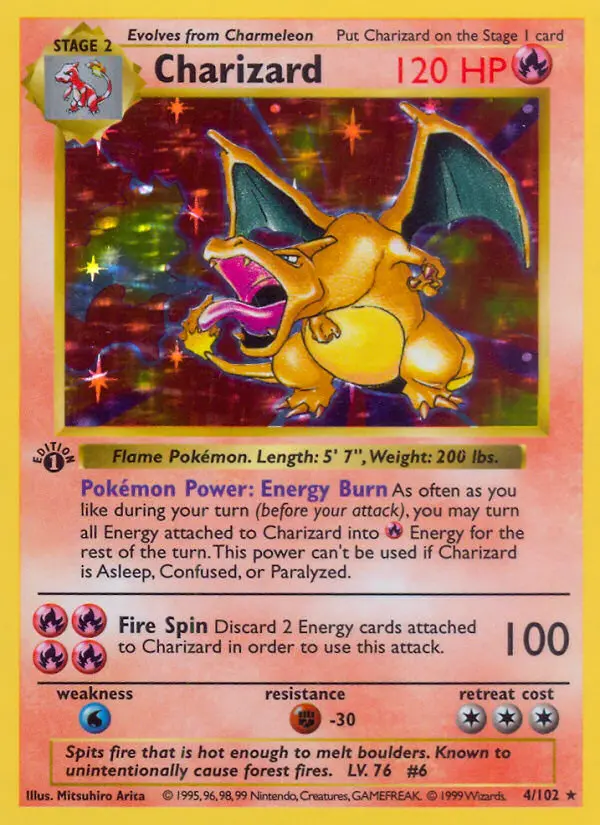
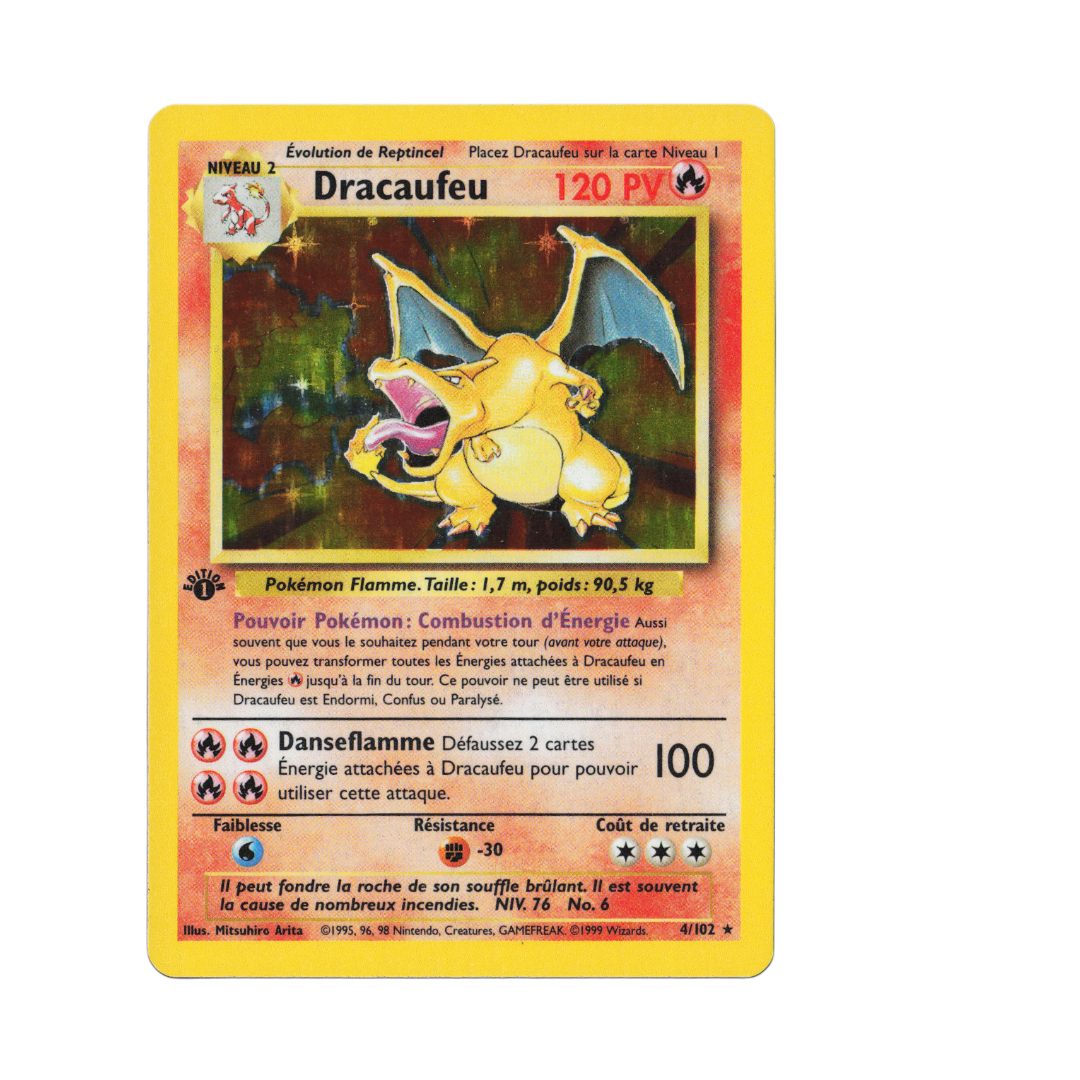
For vintage card collectors, check out our ranking of the rarest French cards for comparison with promos. A key takeaway: modern high-rarity promos are closing the gap with high-value vintage cards. A 2020 Staff Charizard VMAX is already worth more than most vintage holos outside of Charizard, illustrating the power of scarcity in determining value.
The sealed promo market
The sealed promo segment is one of the most dynamic in the current Pokemon market. The golden rule of collectibles applies powerfully here: a sealed product in its original packaging will almost always be worth more than an opened one. And promos are no exception.
Sealed McDonald's packs
Sealed McDonald's packs have become a true collecting phenomenon. The 2021 pack, distributed during the Pokemon 25th Anniversary promotion, is the most striking example. At the time, a sealed pack cost the price of a Happy Meal (about $4). In 2026, sealed packs from that promotion trade between $15 and $45 each, and complete unopened cases (containing all 50 packs) can exceed $1,100.
Older McDonald's promotions are even more valued. Packs from the 2015 (XY era) and 2018 (Sun & Moon era) operations have become scarce and sell between $30 and $90 each in sealed condition. The key is to prioritize packs in perfect condition, with no creases or tears on the packaging, as wrapper condition directly affects value.
Japanese McDonald's packs are generally more valued than Western versions due to more limited print runs and artwork exclusive to the Japanese market. A sealed pack from the 2021 Japan McDonald's promotion can sell for three to five times more than its American or European equivalent.
Sealed Build & Battle kits
Unopened Build & Battle kits represent another opportunity in the sealed promo market. Each kit contains an exclusive holo promo plus four booster packs, making it a two-for-one product for collectors. Kits from the most popular expansions (Celebrations, Crown Zenith, 151) have already appreciated significantly in sealed condition.
Vintage Build & Battle kits (EX era, Diamond & Pearl, Black & White) are the most sought after, with prices reaching several hundred dollars for a complete kit in perfect condition. For more on sealed products as investments, see our guide on which Pokemon booster to buy in 2026.
Blister-sealed movie promos
Movie promo cards still in their original packaging (often a plastic wrap or cardboard blister) are extremely sought after. The blister-sealed Ancient Mew is a classic, but Japanese movie promos in their original pouches are even more valued. Retaining the original packaging is a value multiplier, potentially doubling or tripling the price compared to an unwrapped version.
Where to buy Pokemon promo cards
The promo market is more fragmented than the regular set market, which makes finding reliable listings more complex. Here are the best sources, organized by promo type and trust level.
eBay: the global marketplace
eBay remains the reference platform for promo cards, especially for rare pieces and international promos. eBay's advantage is the depth of its inventory: you can find promos from around the world, from Ancient Mew to the latest Staff cards. Use the "sold items" filter to verify real market prices before buying. Favor sellers with a satisfaction rate above 99% and don't hesitate to ask for additional photos for high-value cards.
TCGPlayer: the US standard
TCGPlayer is the go-to platform for US-based collectors. Its marketplace model offers competitive pricing, verified sellers, and a comprehensive catalog of promo cards from all eras. It is especially strong for modern promos (SWSH, SVP era) and Build & Battle kit cards. The "Market Price" feature gives you an instant sense of fair value.
Conventions and shows
Collector conventions (Comic-Con, Pokemon tournaments, local card shows) are ideal hunting grounds for rare promos. You can examine cards in person, negotiate prices, and sometimes stumble upon exceptional pieces that online sellers have not yet listed. US shows like the National Sports Collectors Convention and regional Pokemon events are particularly rich in promo offerings.
Specialized retailers
Online specialty shops like Cards N Packs offer authenticated promos with a guarantee of authenticity. The advantage of buying from a specialist is trust: every card is verified, descriptions are accurate, and after-sale service is ensured. This is especially important for high-value promos where counterfeiting risk is elevated.
Investing in promo cards: which categories to target
Investing in promo cards requires a different approach than investing in regular set cards. Here are the categories that offer the best potential, based on market trend analysis and fundamental scarcity factors. For broader perspective, see our guide on investing in Pokemon cards in 2026.
Category 1: Modern Staff cards
Staff cards from recent tournaments may represent the best investment opportunity in the promo world. Their rarity is extreme (often fewer than 200 copies per card), their authenticity is easily verifiable via the "STAFF" stamp, and their value has shown a remarkably consistent upward trajectory over the past five years.
Prioritize Staff cards featuring popular Pokemon (Charizard, Pikachu, Legendaries) from sought-after expansions. A Staff Charizard will always be more valued than a Staff card of an obscure Pokemon, regardless of relative rarity. To understand why certain Pokemon dominate the market, see our Charizard price evolution analysis.
Category 2: Sealed McDonald's promos
Sealed McDonald's packs offer an accessible entry point with significant upside potential. The advantage is the relatively low acquisition cost ($5 to $45 depending on the year) and ease of storage. Risk is more limited than for high-value individual cards. Prioritize packs from the most recent promotions (those you can still acquire easily) and keep them in pristine sealed condition.
Category 3: Vintage trophy promos
For investors with a larger budget, vintage trophy promos (No. 1 Trainer, Tropical Mega Battle, Kangaskhan Family Event) are the art-market equivalent: rare, beautiful pieces whose value only grows over time. These cards are the Picassos of the Pokemon world -- no more will ever be produced, and global demand continues to rise.
Category 4: Pokemon Center exclusives
Japanese Pokemon Center promos are an undervalued segment. With the number of Pokemon Centers worldwide being limited and distribution restricted to physical visitors, these cards have a natural scarcity that is often underestimated by the market. As the collector community expands across Asia and Europe, demand for these exclusive promos is only growing.
Category 5: Build & Battle kits from popular expansions
Sealed Build & Battle kits from the most popular expansions represent a medium-term investment with a moderate risk profile. Acquisition cost is typically $25 to $40, and value tends to double or triple within two to three years of the expansion's release, especially for highly demanded sets.
The golden rule for promo investing: diversify across categories. A balanced portfolio might include a few modern Staff cards (medium budget), a reserve of sealed McDonald's packs (low budget), and, if your budget allows, one or two vintage trophy promos (high budget). This diversification protects you against fluctuations in any one market segment.
Timeline of notable promo releases
To better understand the evolution of the promo market, here is a timeline of key moments that have shaped this universe.