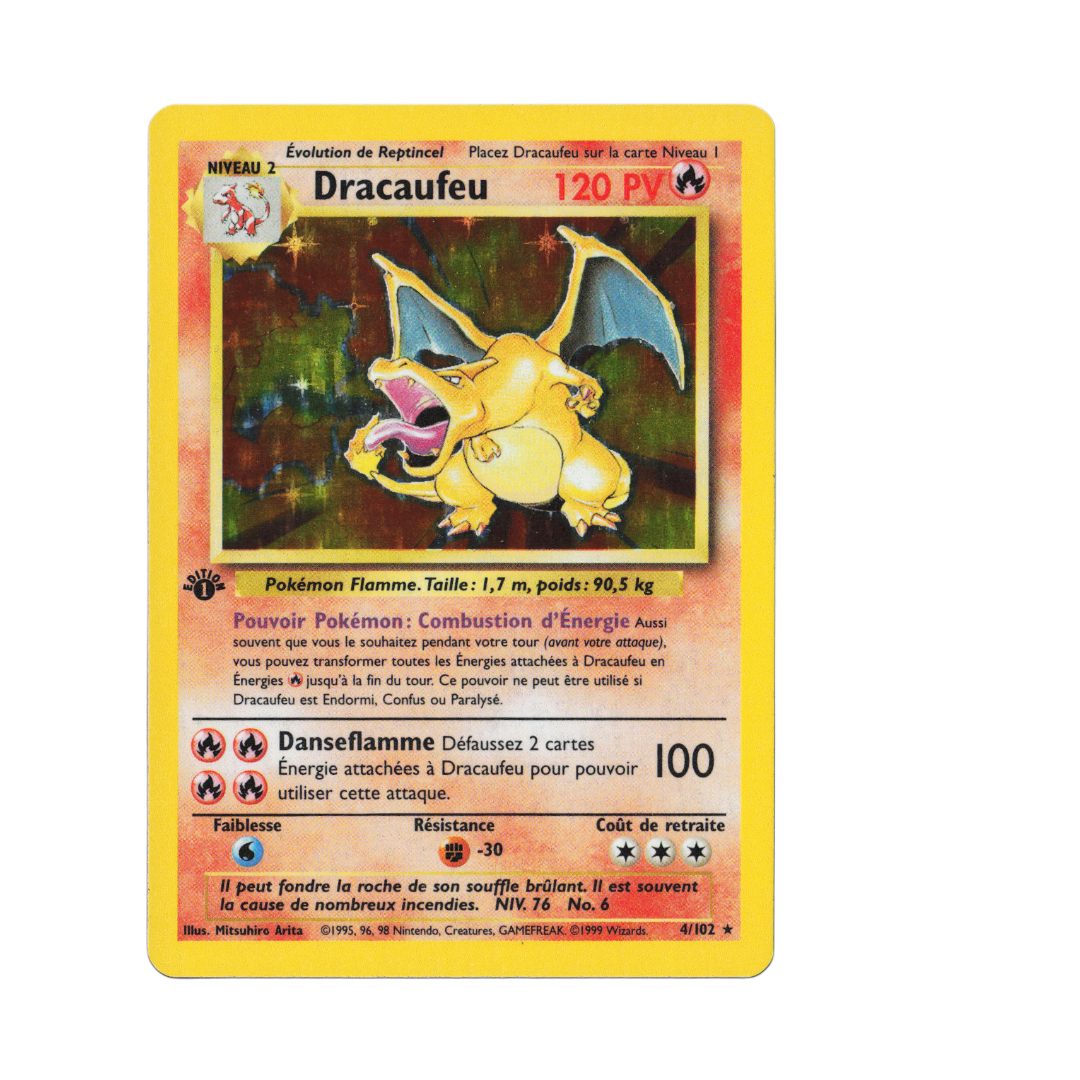
In the world of Pokemon card collecting, one debate keeps coming back: should you go for Japanese cards or French cards? The question is worth asking, because these two versions differ significantly in terms of manufacturing quality, price, exclusives, and even set structure. Whether you are a beginner collector or a seasoned investor, understanding these differences will help you make informed choices and maximize the value of your collection.
At Cards N Packs, we handle cards from both origins daily, from the Base Set to the most recent expansions. This guide is the result of that hands-on experience. We will objectively compare Japanese and French cards across all the criteria that matter to a serious collector.
Print quality: the Japanese advantage
This is probably the most important and most universally recognized difference among collectors worldwide. Japanese Pokemon cards benefit from significantly superior print quality compared to their French counterparts, and this has been the case since the very beginning of the game. This difference can be attributed to several factors in the manufacturing process.
Japanese cards are printed directly in Japan, in factories controlled by The Pokemon Company. The paper used is of a slightly higher weight, with a smoother and more rigid texture. The colors are more vibrant and saturated, the outlines sharper, and the overall contrast of the illustration is noticeably better. If you place a Japanese holographic card next to its French equivalent, the difference is striking: the holographic reflections are deeper and more dynamic on the Japanese version.
Quality comparison in numbers
According to grading service data, Japanese cards achieve higher centering scores on average. At PSA, approximately 60% of submitted Japanese cards receive a PSA 10 (Gem Mint) grade, compared to only 30 to 40% for French and English cards. This centering difference is a direct indicator of the precision of the cutting machines used in Japan.
Centering is another area where Japanese cards excel. The borders are almost always balanced on all four sides, a decisive criterion for achieving a maximum grade during PSA or CGC certification. French cards, printed in Belgium or the United States depending on the era, more frequently suffer from centering defects, factory micro-scratches, and color variations between print runs.
Japanese quality control is also stricter. Cards with any visible defect are removed from production before packaging. In Europe, standards are less rigorous, which explains why you regularly find brand-new French cards with slight imperfections straight out of the booster pack.
Price differences: Japanese cards are often more affordable
Contrary to what you might think, Japanese Pokemon cards are generally less expensive than their French equivalents. This is true for both sealed products and singles, and the price gap can be significant.
| Product | Japanese price (approx.) | French price (approx.) | Difference |
|---|---|---|---|
| Booster Box (36 packs) | 45-55 EUR | 140-160 EUR | -65% |
| Single booster | 1.50-2 EUR | 4-5 EUR | -60% |
| Premium box | 30-50 EUR | 50-80 EUR | -30 to -40% |
For recent sealed products, a Japanese display (30 boosters) typically costs between 45 and 55 euros including shipping, while a French display of 36 boosters runs around 140 to 160 euros. Even accounting for import fees, the savings are considerable. Japanese boosters contain slightly fewer cards (5 instead of 10 in French), but the quality-to-price ratio remains clearly in favor of Japanese cards.
For vintage cards, the situation is more nuanced. Some older Japanese cards, such as the Charizard from the Japanese Base Set, trade at lower prices than the French version, because the Japanese market was flooded with large print runs. On the other hand, certain exclusive Japanese promos reach staggering prices because they were never reprinted and do not exist in a French version.
Tip for collectors
If your goal is to complete a collection at a lower cost while benefiting from superior quality, Japanese cards are a strategic choice. However, if you are targeting resale on the French-speaking market or the nostalgia of a French-language collection, French cards retain a special appeal in the local market.
Japanese exclusives: a world of their own
One of the most compelling arguments in favor of collecting Japanese cards is the existence of a considerable number of cards exclusive to the Japanese market. These cards, never released in French or even English, represent an entire segment of the Pokemon universe that is inaccessible to collectors who limit themselves to Western editions.
Pokemon Center promos
The Pokemon Centers, official stores located in major Japanese cities, regularly distribute exclusive promotional cards for new store openings, seasonal events, or special collaborations. These cards are often illustrated by renowned artists and produced in limited quantities. Examples include regional Pikachu promos, Pokemon Center anniversary cards, and special sets sold only in-store. Some of these promos reach impressive valuations just a few years after their release.
Artistic collaborations
Japan is also the birthplace of unique collaborations between The Pokemon Company and famous artists or brands. Cards illustrated by Yu Nagaba, collections in partnership with museums, and special sets like the famous "Kanazawa's Pikachu" are all examples of collectible pieces that cannot be found outside Japan. These collaborations produce cards whose aesthetics differ radically from the usual style and are particularly sought after by international collectors.
Web promos and contests
Some cards are only distributed through online contests, web campaigns, or Japanese subscription services. The "Web Series promos," for example, were cards distributed exclusively through the Japanese Pokemon website in the 2000s. These cards, produced in very small quantities, have become extremely rare and coveted collectibles. They have never had a French equivalent and represent interesting investment opportunities for knowledgeable collectors.
WOTC era differences: two different worlds
For vintage card collectors, understanding the differences between Japanese and French editions from the Wizards of the Coast era (1996-2003) is essential. For a complete breakdown of every set from this period, see our Wizard block guide covering all expansions from 1999 to 2003. The very structure of the expansions differs profoundly between the two markets, creating unique situations for collectors.
The Neo case: 4 Japanese sets, 4 French sets... but not the same ones
In Japan, the Neo series consisted of four distinct subsets: Neo Genesis (Gold, Silver, to a New World), Neo Discovery (Crossing the Ruins), Neo Revelation (Awakening Legends) and Neo Destiny (Darkness, and to Light). While the names remained similar in French, the exact composition of the sets was redistributed. Some cards present in one Japanese set ended up in a different set in the French version, and the numbering differs completely. For a collector seeking to own both versions of a Neo series, each version must therefore be treated as an independent collection.
Numbering is another major point of divergence. Japanese cards did not have a number out of the total expansion count in the early sets. Thus, a card might simply bear the number "003" in Japan, while its French equivalent displayed "3/102" for the Base Set. This open numbering system in Japan versus closed numbering in the West has implications for collectors seeking to catalog their cards.
The holographic patterns also differ between the two versions. Japanese holographics from the WOTC era use a "cosmos" pattern that is slightly different from that of Western cards. The stars and reflections have a distinct texture and arrangement. Some collectors strongly prefer the Japanese holographic for its luminosity and depth, while others remain attached to the Western pattern for nostalgic reasons.
It should also be noted that there is no 1st Edition in the Western sense on Japanese cards. In Japan, first print runs do not carry a "1st Edition" stamp as they do in French or English. The distinction is instead made between initial print runs and reprints, identifiable by subtle differences in layout or copyright. This is a crucial point to understand when correctly authenticating a vintage Japanese card.
Why collect Japanese cards?
Beyond the factual differences, there are strategic and emotional reasons to turn to Japanese cards. Here are the main arguments driving more and more French-speaking collectors to diversify their collections.
- Investment potential: Japanese cards have historically been undervalued compared to English cards. With the globalization of the market and the growing interest of Western collectors in Japanese editions, many experts anticipate a significant revaluation in the coming years. Exclusive promos and high-grade vintage cards represent particularly interesting investment opportunities.
- Relative rarity: Certain Japanese cards, especially event promos and limited distribution cards, are produced in much smaller quantities than international editions. This intrinsic rarity supports their long-term value.
- Aesthetic quality: For many collectors, visual pleasure is a primary criterion. Japanese cards objectively offer a superior aesthetic experience thanks to their print quality, and owning the "best version" of a card is a genuine source of satisfaction.
- Community: The Japanese card market has an active and passionate community, with forums, collector groups, and dedicated events. Joining this community opens up enriching opportunities for trading and discovery.
- Early access to expansions: Sets always release in Japan several months before their international adaptation. Collecting in Japanese allows you to discover and acquire new cards well before their French release.
Buying advice: where to find authentic Japanese cards
Obtaining authentic Japanese Pokemon cards from France is much easier today than it was ten years ago, but some precautions are necessary to avoid counterfeits and unpleasant surprises.
Specialized French-speaking shops
The simplest and safest solution is to go through specialized shops that import Japanese cards directly. At Cards N Packs, we offer a selection of vintage and recent Japanese cards, verified and authenticated. The advantages include guaranteed authenticity, shipping from France, and customer service in French.
Proxy services and direct purchase from Japan
For more adventurous collectors, Japanese proxy services (Buyee, Zenmarket, FromJapan) allow you to buy directly from Japanese platforms like Yahoo Auctions Japan or Mercari Japan. These services purchase for you in Japan and reship the cards to France. It is an excellent way to access rare cards at competitive prices, but you need to account for service fees (5 to 10%), international shipping costs, and delivery times (2 to 4 weeks).
Japanese sellers on eBay
Many Japanese sellers offer their cards directly on eBay with international shipping. Prefer sellers with an excellent track record (over 99% positive feedback) and a high sales volume. Always check the photos and do not hesitate to request additional pictures before purchasing a valuable card.
Beware of counterfeits
The Japanese card market is not immune to counterfeits. The same precautions as for French cards apply: be wary of prices that seem too low, check print quality and weight, and prefer established sellers. To learn more about this topic, check out our guide to recognizing an authentic Pokemon card.
English vs Japanese cards: the US and UK market perspective
While this guide focuses on the comparison between Japanese and French cards, English-speaking collectors face their own distinct set of considerations when weighing Japanese cards against English-language editions. The dynamics of the US and UK markets differ significantly from the French market, and understanding these differences is essential for collectors based in North America or the British Isles.
English-language Pokemon cards have historically been the dominant force in the global secondary market. The US collector base is the largest in the world, and English cards benefit from being readable and collectible across the entire Anglosphere -- the United States, United Kingdom, Canada, Australia, and beyond. This massive demand base means that English-language cards, particularly from the WOTC era, command the highest prices of any regional edition. An English Unlimited Base Set Charizard PSA 10 typically sells for $3,000 to $6,000 USD, while the Shadowless variant in PSA 10 commands $15,000 to $25,000 USD, and the 1st Edition Shadowless PSA 10 has reached $550,000 USD at Heritage Auctions. By comparison, the Japanese Base Set Charizard in PSA 10 has typically traded in the $5,000 to $15,000 USD range depending on the variant.
This price disparity creates a fascinating arbitrage opportunity for English-speaking collectors. Japanese cards offer objectively superior print quality, as discussed earlier in this guide, yet trade at a fraction of the price of their English equivalents. For a US or UK collector who prioritizes the aesthetic experience and condition potential of their cards, Japanese editions represent extraordinary value. You can acquire a PSA 10 Japanese holographic card from the vintage era for one-third to one-fifth the price of the same card in English, while owning what is arguably the better-produced version.
However, liquidity matters. English cards sell faster and to a wider audience on platforms like eBay.com, TCGPlayer, and at US card shows. If your goal is to build a collection that can be easily liquidated at competitive prices, English cards remain the safer choice in the US and UK markets. Japanese cards, while growing in popularity among Western collectors, still require a more knowledgeable buyer pool and may take longer to sell at full market value outside of specialized communities.
The cultural shift among English-speaking collectors
Since 2020, there has been a notable cultural shift in how American and British collectors perceive Japanese cards. Influencers, YouTube channels, and social media communities have increasingly highlighted the quality advantages of Japanese editions. Popular English-language content creators regularly feature Japanese box openings alongside English ones, and the visual difference in print quality is immediately apparent to viewers. This exposure has driven a new generation of English-speaking collectors to incorporate Japanese cards into their collections, which was relatively uncommon before 2019.
Population report analysis: why certain Japanese cards have lower PSA populations
One of the most overlooked factors in the Japanese vs English card debate is the PSA population report -- the public database of every card PSA has ever graded, broken down by card, grade, and variant. Understanding population data gives English-speaking collectors a significant edge when evaluating the true rarity of Japanese cards.
Why Japanese populations are lower
For most vintage cards, the PSA population of graded Japanese copies is dramatically lower than the English equivalent. Take the Base Set Charizard as an example: PSA has graded well over 90,000 English Base Set Charizard cards across all grades and variants (Unlimited alone exceeds 90,000), while Japanese copies number in the low thousands. This disparity does not necessarily mean fewer Japanese Charizards were printed -- in fact, Japan likely had comparable or even larger print runs for the earliest sets. The lower population is instead driven by several factors.
First, grading culture took longer to reach Japan. PSA and CGC are American companies, and the practice of sending cards for third-party grading originated in the US sports card market. While American and British collectors began grading Pokemon cards in earnest in the early 2010s, Japanese collectors were slower to adopt the practice, preferring to keep cards in sleeves and top-loaders rather than sealed slabs. This means a vast reservoir of ungraded Japanese cards still exists in Japanese collections, waiting to enter the graded market.
Second, shipping logistics create friction. Submitting cards to PSA from Japan involves international shipping, customs declarations, and longer turnaround times. Many Japanese collectors have historically opted to sell their cards raw rather than invest the time and cost in grading. For US and UK-based collectors, this means that acquiring raw Japanese vintage cards and grading them domestically can yield high-grade specimens that add meaningfully to the population report.
What low populations mean for value
Low PSA populations on Japanese cards create a supply-demand imbalance that is increasingly relevant to English-speaking investors. As more Western collectors seek graded Japanese cards, the limited supply of existing high-grade slabs puts upward pressure on prices. Cards that have fewer than 50 copies graded PSA 10 worldwide are considered exceptionally scarce, and many Japanese vintage holographics fall into this category. By comparison, their English counterparts may have 500 or more PSA 10 copies in existence. For collectors who value true scarcity, the population data makes a compelling case for Japanese editions.
A strategic approach used by savvy US and UK collectors is to cross-reference population reports with recent sales data on platforms like PSA's auction prices realized, eBay sold listings, and Heritage Auctions archives. When a Japanese card has both a low PSA population and rising sale prices, it signals strong demand chasing limited supply -- the classic conditions for continued price appreciation.
Price trend analysis: Japanese cards gaining value in Western markets (2020-2026)
The period from 2020 to 2026 has been transformative for Japanese Pokemon cards in the English-speaking market. What was once a niche collecting lane has become a mainstream component of serious Pokemon portfolios in the US and UK.
The 2020-2021 boom and its aftermath
The Pokemon card market experienced an unprecedented boom in 2020-2021, driven by pandemic-era nostalgia, celebrity endorsements, and a flood of new collectors entering the hobby. During this period, English-language cards saw the most dramatic price increases, with iconic cards like the Base Set Charizard rising from $10,000 to over $400,000 for the highest-graded specimens. Japanese cards also rose, but more modestly -- a pattern that created significant room for future appreciation.
When the broader market corrected in 2022-2023, English-language card prices pulled back by 30 to 50 percent from their peak levels. Japanese cards, having risen less dramatically, experienced smaller corrections and faster recoveries. This resilience caught the attention of data-driven collectors and investors in the US and UK who began viewing Japanese cards as a more stable store of value with greater upside potential.
2024-2026: the Japanese card renaissance
From 2024 onward, Japanese vintage cards have shown consistent year-over-year price appreciation in Western markets. Several factors are driving this trend. The growing awareness of Japanese print quality, the low PSA populations discussed earlier, and the increasing ease of purchasing Japanese cards through global platforms have all contributed. Additionally, the weakening of the Japanese yen against the US dollar and British pound in recent years has made Japanese cards more affordable for Western buyers, further stimulating demand.
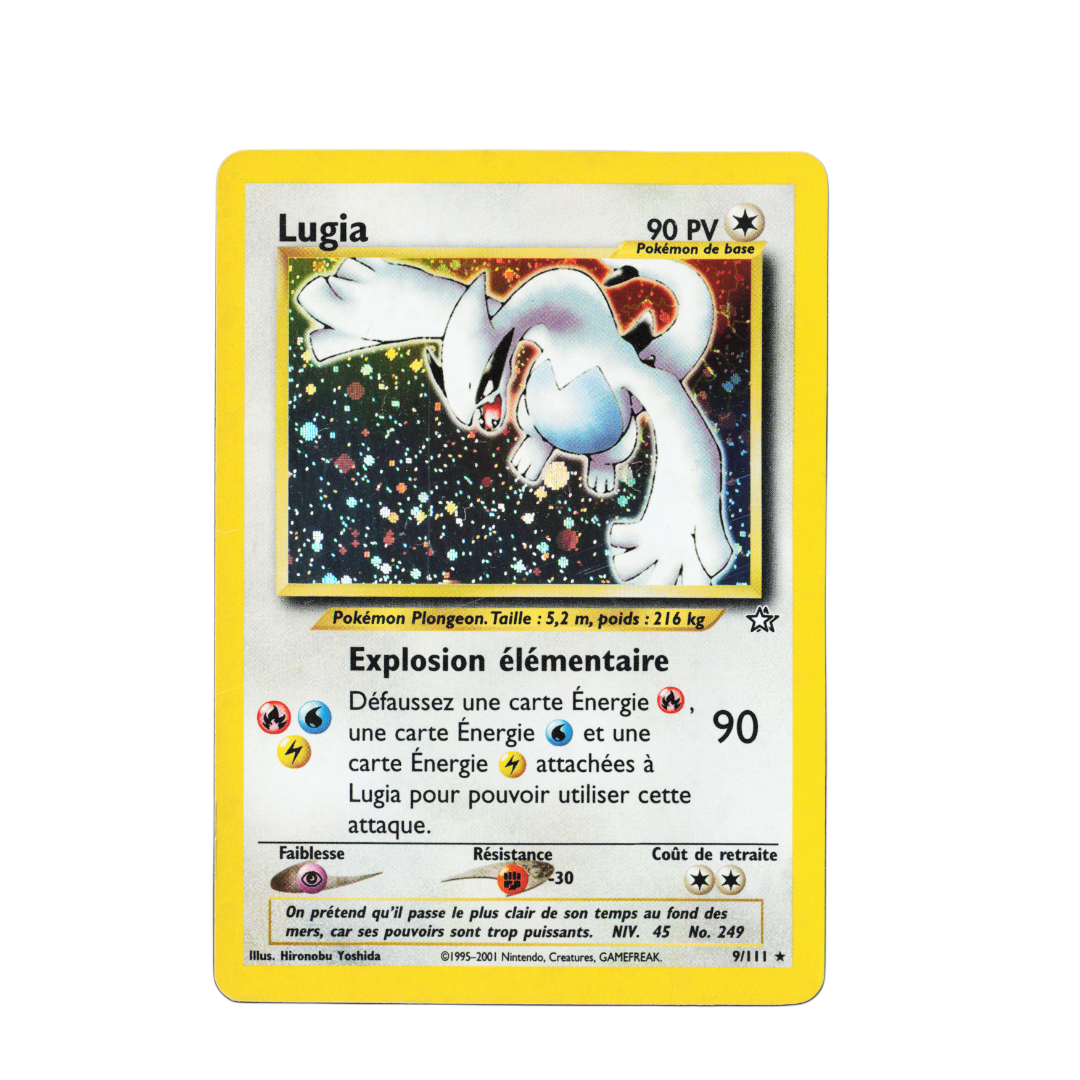
Key price movements illustrate the trend. The Japanese Base Set Charizard (No Rarity symbol variant) in PSA 10 has seen remarkable appreciation, with copies now commanding over $40,000 USD -- a dramatic increase from just a few years earlier. Japanese Neo Genesis Lugia in PSA 10 has followed a similar upward trajectory. Even mid-tier Japanese vintage holographics that were trading for $200 to $500 in PSA 9 have doubled or tripled in value as Western demand intensified.
What English-speaking collectors should watch
For US and UK collectors looking ahead, several categories of Japanese cards appear particularly well-positioned for continued growth. Japanese exclusive promos with no English equivalent offer unique value that cannot be replicated in any other language. Early vintage holographics in high grade (PSA 9 or 10) remain scarce and increasingly demanded. And modern Japanese special arts and illustration rares, which benefit from Japan's superior print quality, are already commanding premiums over their English counterparts in the secondary market -- a relatively new phenomenon that signals a fundamental shift in how English-speaking collectors value Japanese editions.
The long-term trajectory is clear: the gap between English and Japanese card prices is narrowing, and the era of Japanese cards being dramatically undervalued relative to their quality and scarcity appears to be ending. English-speaking collectors who recognized this trend early have already seen substantial returns, and the fundamentals suggest further convergence in the years ahead.
Conclusion: Japanese and French, two complementary collections
The debate between Japanese and French cards has no absolute answer, as it depends on your collecting goals, your budget, and your personal preferences. French cards have the advantage of nostalgia, readability for French speakers, and sustained local demand. Japanese cards offer superior print quality, often more affordable prices, exclusives that are unavailable in French, and still-untapped investment potential.
Our recommendation? Do not limit yourself to a single origin. The most savvy collectors build mixed collections, choosing for each card the version that offers the best balance of quality, rarity, and price. An iconic card like the Base Set Charizard deserves to be owned in both versions. And Japanese exclusives, by definition impossible to find in French, represent a valuable enrichment for any ambitious collection.
Whatever your preference, the key is to collect with passion and knowledge. Pokemon cards, whether they come from Tokyo or Paris, carry the same magic that made us all fall in love with this universe. As the franchise celebrates a major milestone, explore how the 30th anniversary of Pokemon in 2026 is shaping the collector market across both origins.